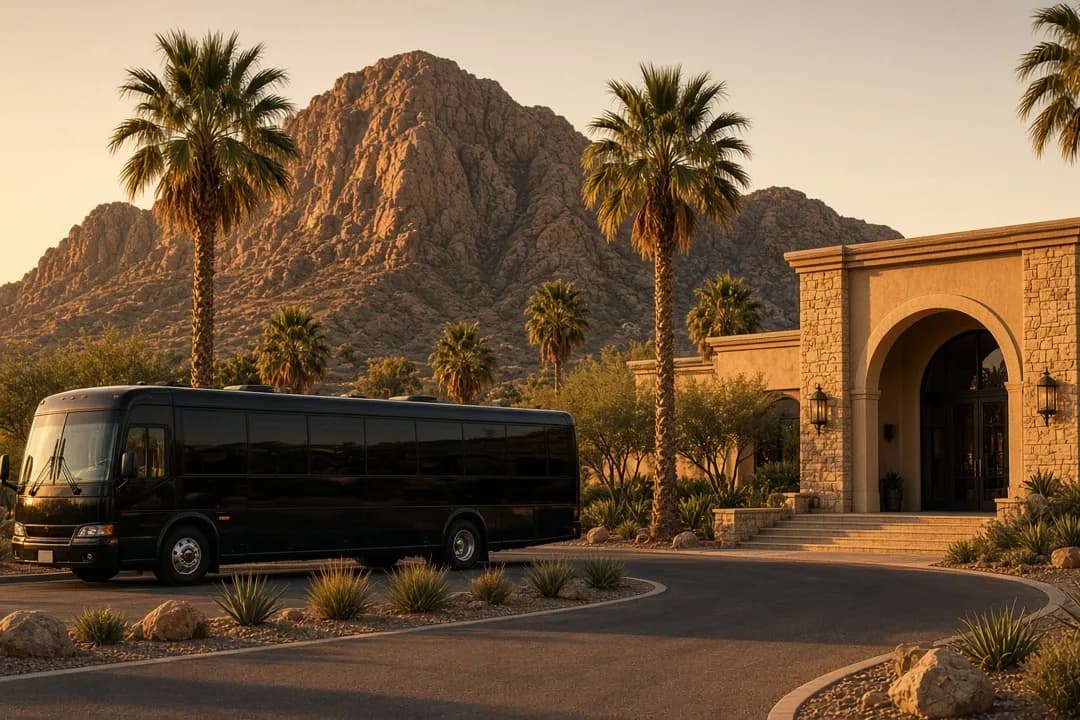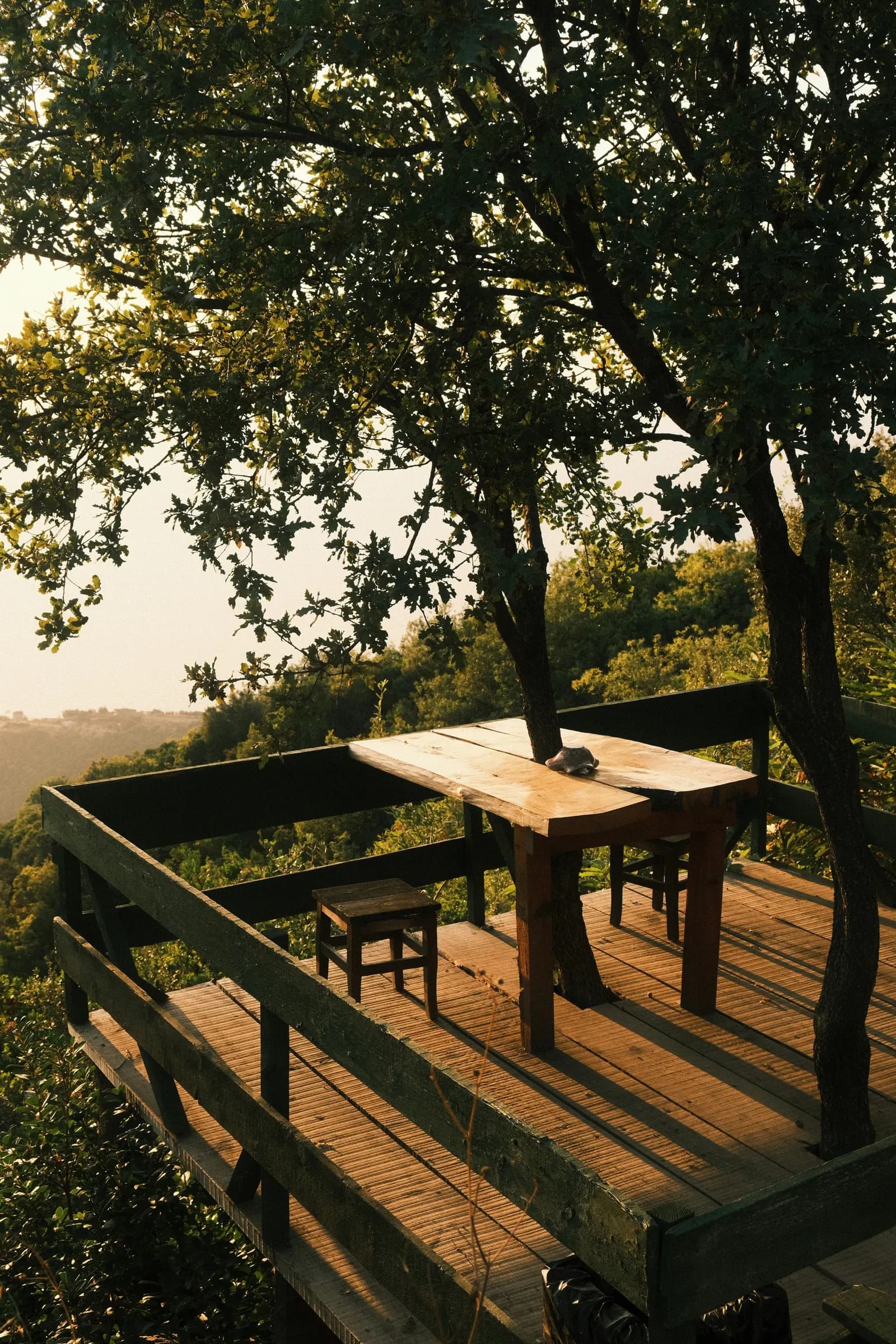
When the light goes in wedding season
November, March and October are our three busiest wedding months, and between them they're two very different lighting calendars. Arizona doesn't do daylight saving, so nothing jumps in spring or fall, but the drift across a season is big.
| Month | Sunset, roughly | What that does to the ride |
|---|---|---|
| October | Just after 6:00 pm early on, near 5:40 by the end | Early October leaves room after the ceremony. Late October behaves like November |
| November | Around 5:30 pm | Portraits almost always have to happen before the ceremony |
| March | Roughly 6:30 to 6:45 pm | There's room for a stop between the ceremony and the reception |
Look up the real sunset for your date and your spot. Then remember that mountains end the light early: a venue on the east side of Camelback, or tucked against the McDowells, loses direct sun well before the published time.
Build the route around the light
Start with the minute the photographer wants the couple standing in position. Subtract the unloading and the walk, then the drive, then the loading at the suite. What's left is your departure time, and it's always earlier than the couple guessed.
Give the driver each stop as an address or a dropped pin. "The spot with the big saguaros" is no use to somebody steering a bus, and sending it ahead means we can check that the vehicle fits the approach and the turnaround. The route planner lays the stops out in order so you can see whether the sequence makes sense on a map.
Order matters more than people think. A stop ten minutes off the direct line costs twenty once you've gone out and come back. Where you can, pick somewhere that already sits between the getting-ready site and the ceremony, and the photo spot finder is a decent place to start that list.
How long a stop really takes
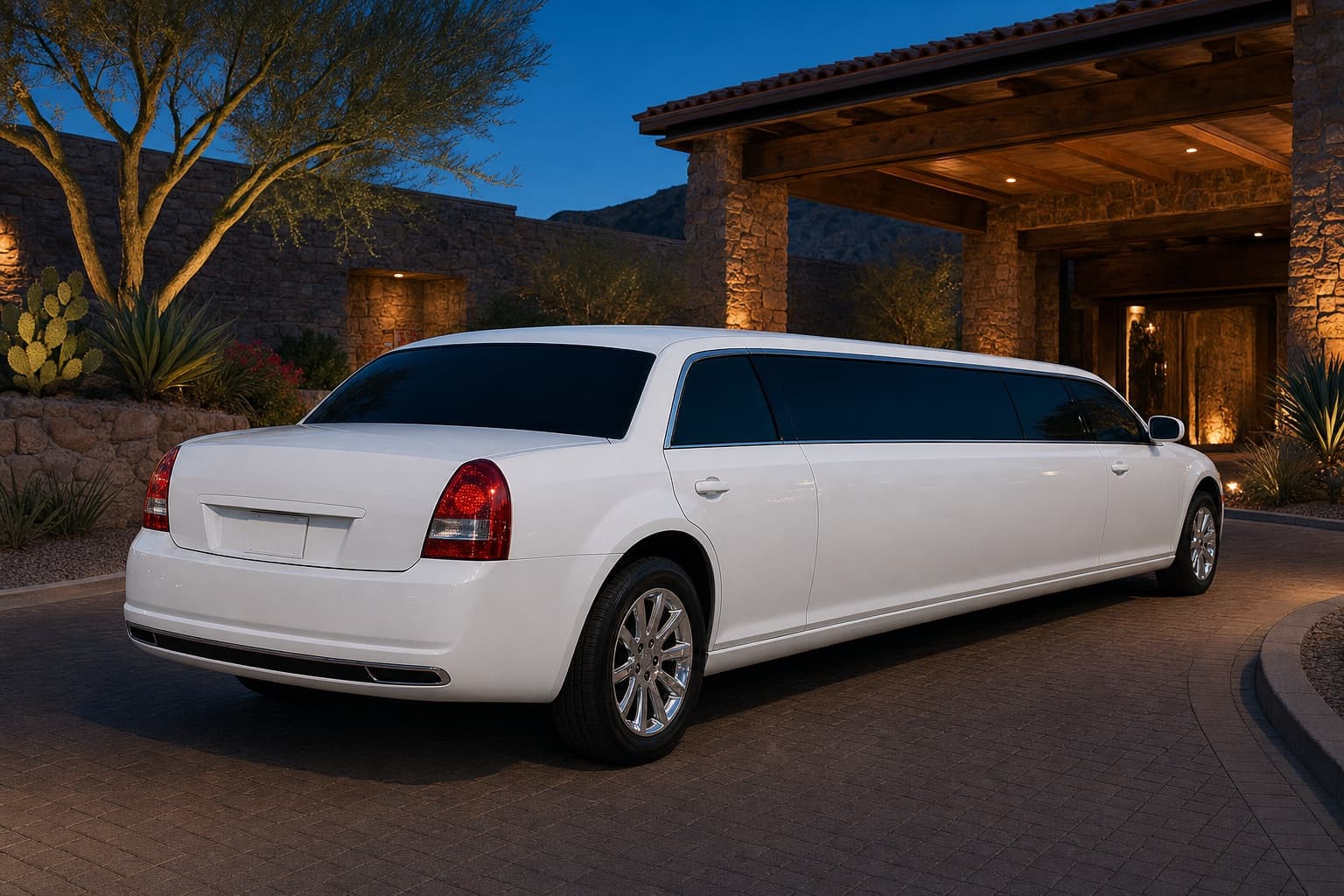
Photographers budget shooting time. We see door-to-door time, and the two are a long way apart. Eighteen people do not leave a vehicle quickly.
| Step | Plan on |
|---|---|
| Park, open up, everyone off, dress gathered | 5 to 8 minutes |
| Walk to the spot and get arranged | 3 to 5 minutes |
| Shooting | 15 minutes |
| Walk back, reload, count heads | 5 to 8 minutes |
Those are our planning estimates from watching it happen, not measured figures. They come to about half an hour for a stop the timeline calls "15 min photos." Two stops is an hour.
Most trips we quote are four hours, and a wedding party ride with two photo stops, a ceremony drop and a reception transfer eats that fast. If the photo plan is ambitious, say so when you ask for the quote so the hours match the day.
Where a bus can stop, and where it can't
A sedan pulls over almost anywhere. A party bus or a stretch limo doesn't, and the Valley's favorite portrait spots weren't designed with one in mind.
City parks
Papago Park has paved lots a big vehicle can use, and the red buttes photograph beautifully in late light. Plenty of parks, preserves and resorts want a permit for professional photography, and some restrict commercial vehicles outright. Rules differ and they change, so check with whoever manages the land, and the same goes for the Desert Botanical Garden and its own photography policies.
Desert pull-offs
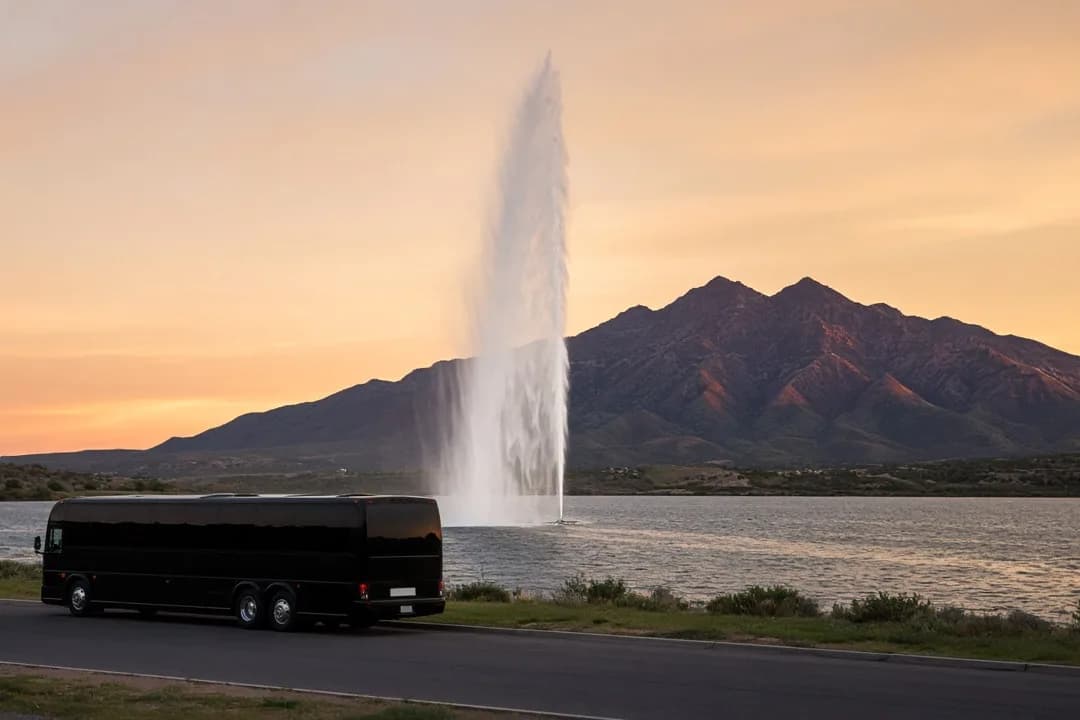
Roadside spots north of Scottsdale or out toward Fountain Hills look wide open on a map. On the ground, most are soft dirt shoulders with nowhere to turn a long vehicle around.
A driver won't take a bus onto a surface where it might get stuck, and won't stop where it isn't safe or legal. Pick pull-offs with a paved or firmly graded lot, and send us the pin so we can look at it first.
Old Town streets
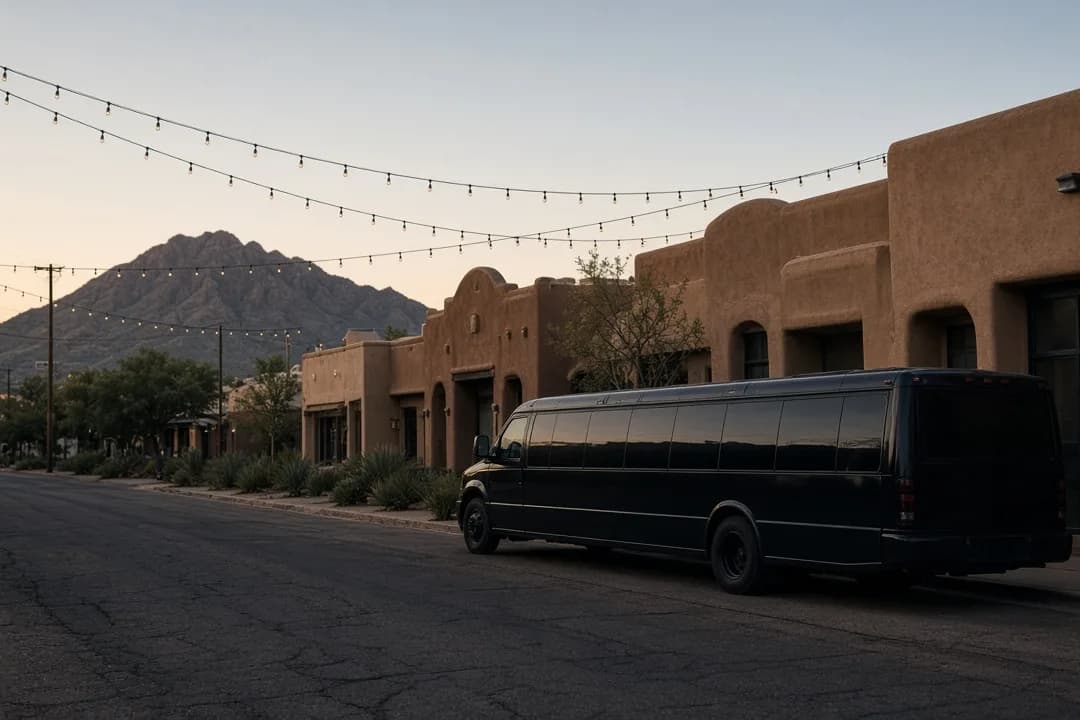
Old Town gives you murals, brick and string lights. It also has narrow streets, almost nowhere to load, and heavy Friday and Saturday evening traffic. What works is a drop at the edge of the district, a short walk in with the photographer, and a pickup at an agreed corner at an agreed time.
Use the vehicle as a set
Some of the most relaxed frames of the day happen in and around the vehicle, because it's the one place the wedding party is together with nothing to do.
Outside
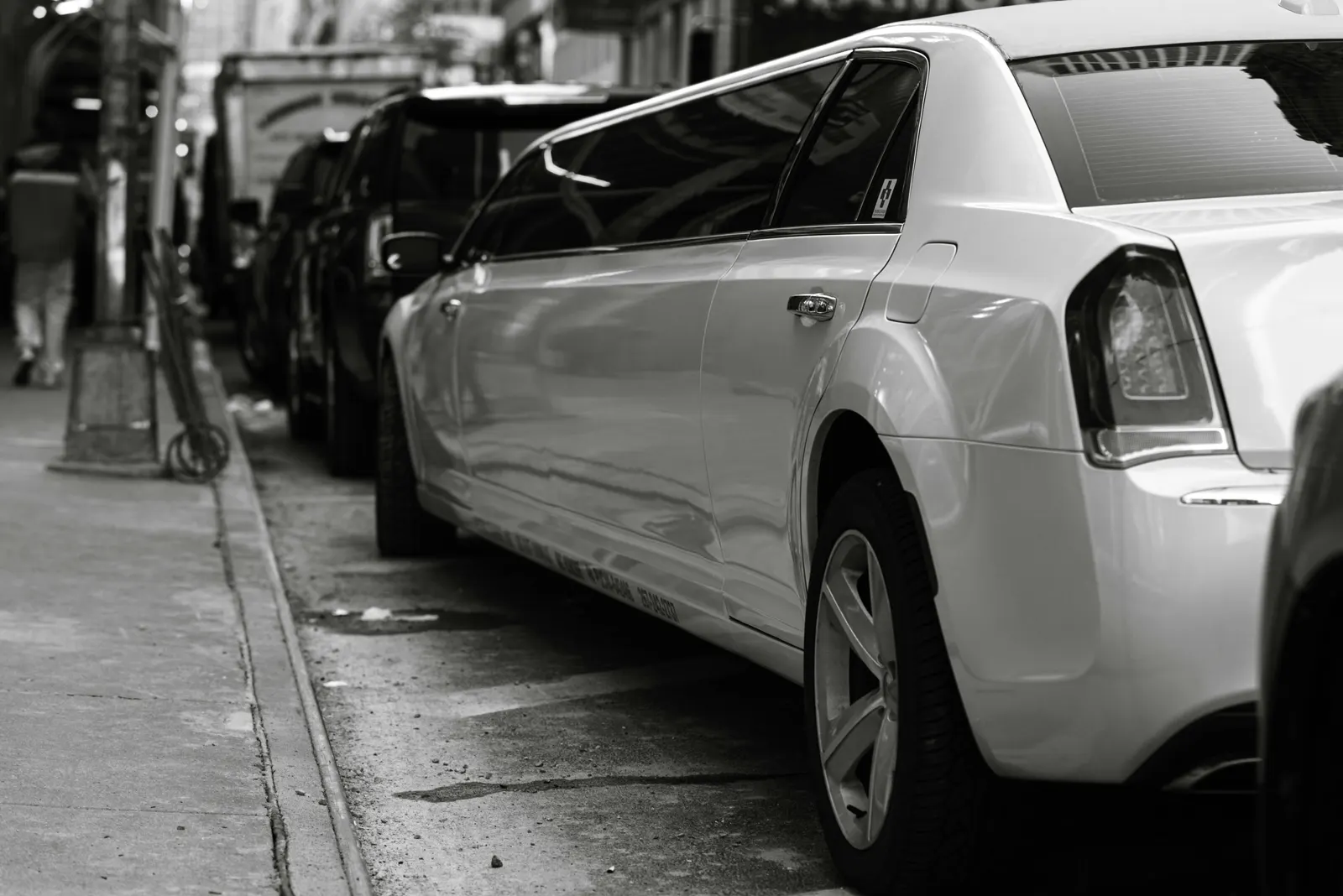
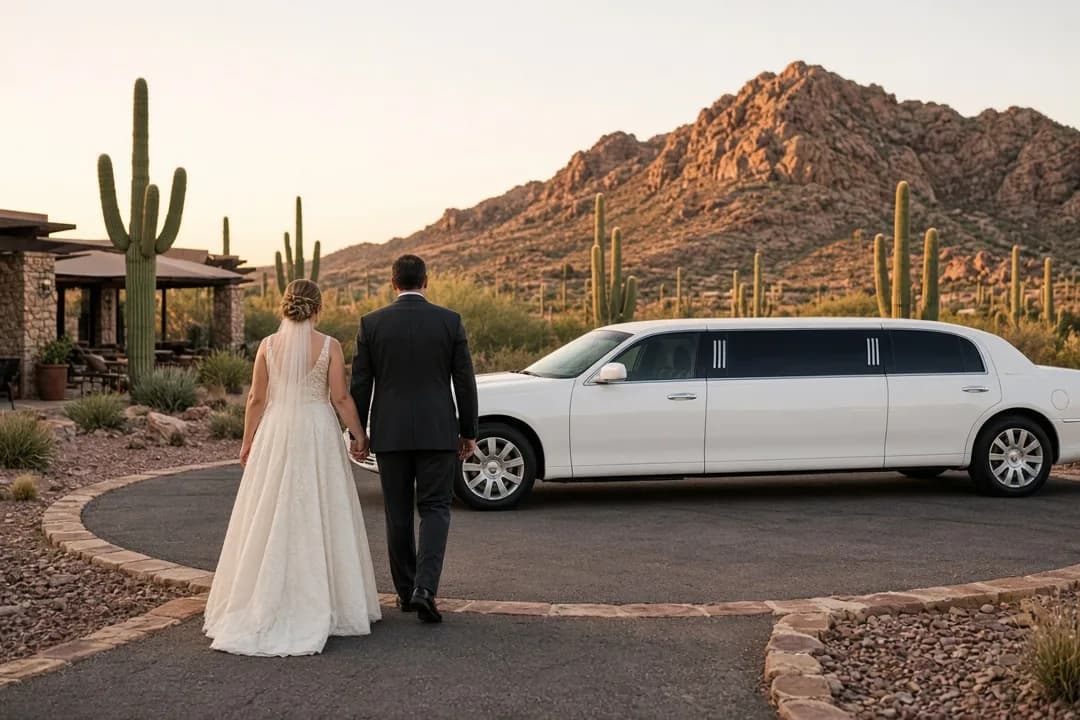
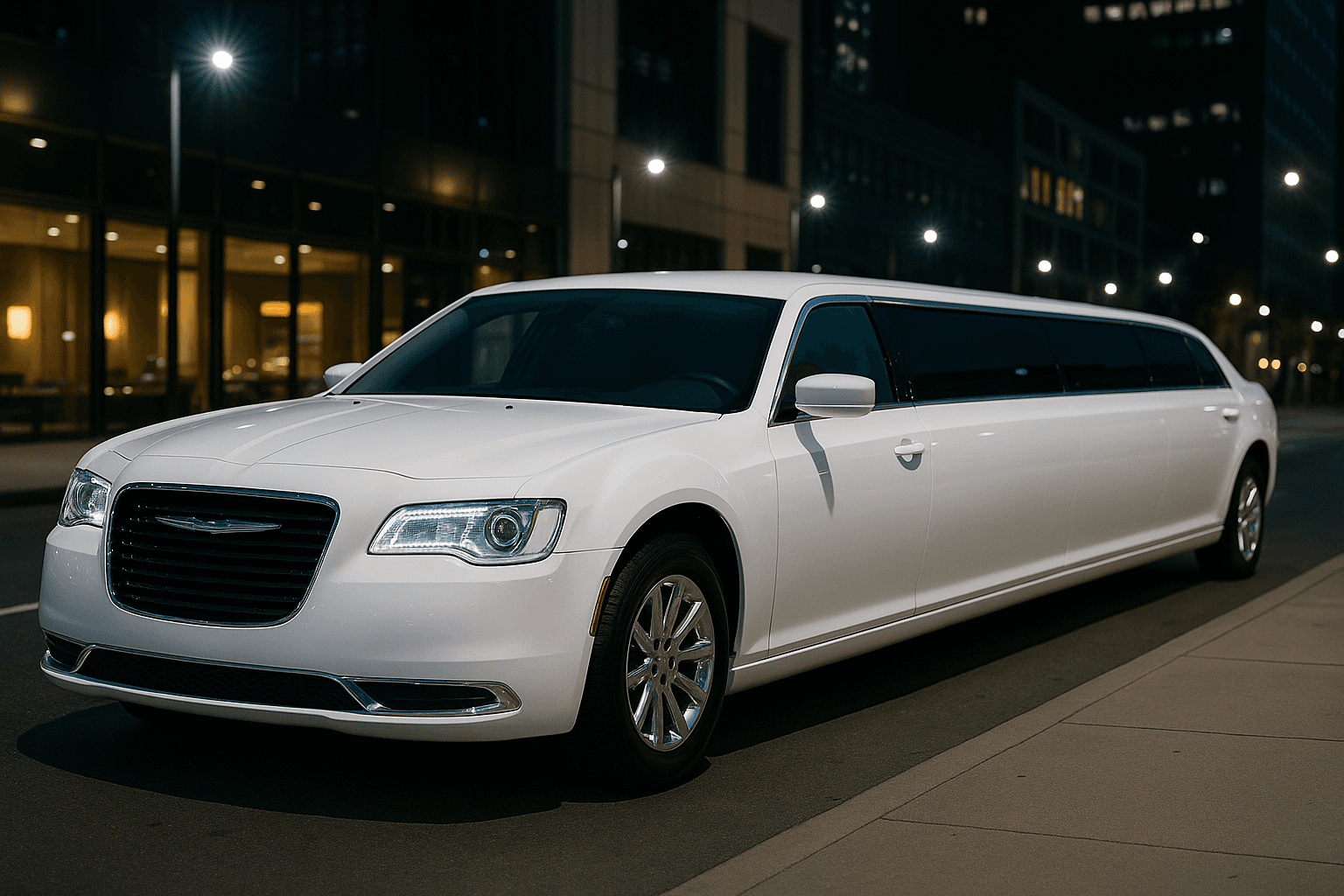
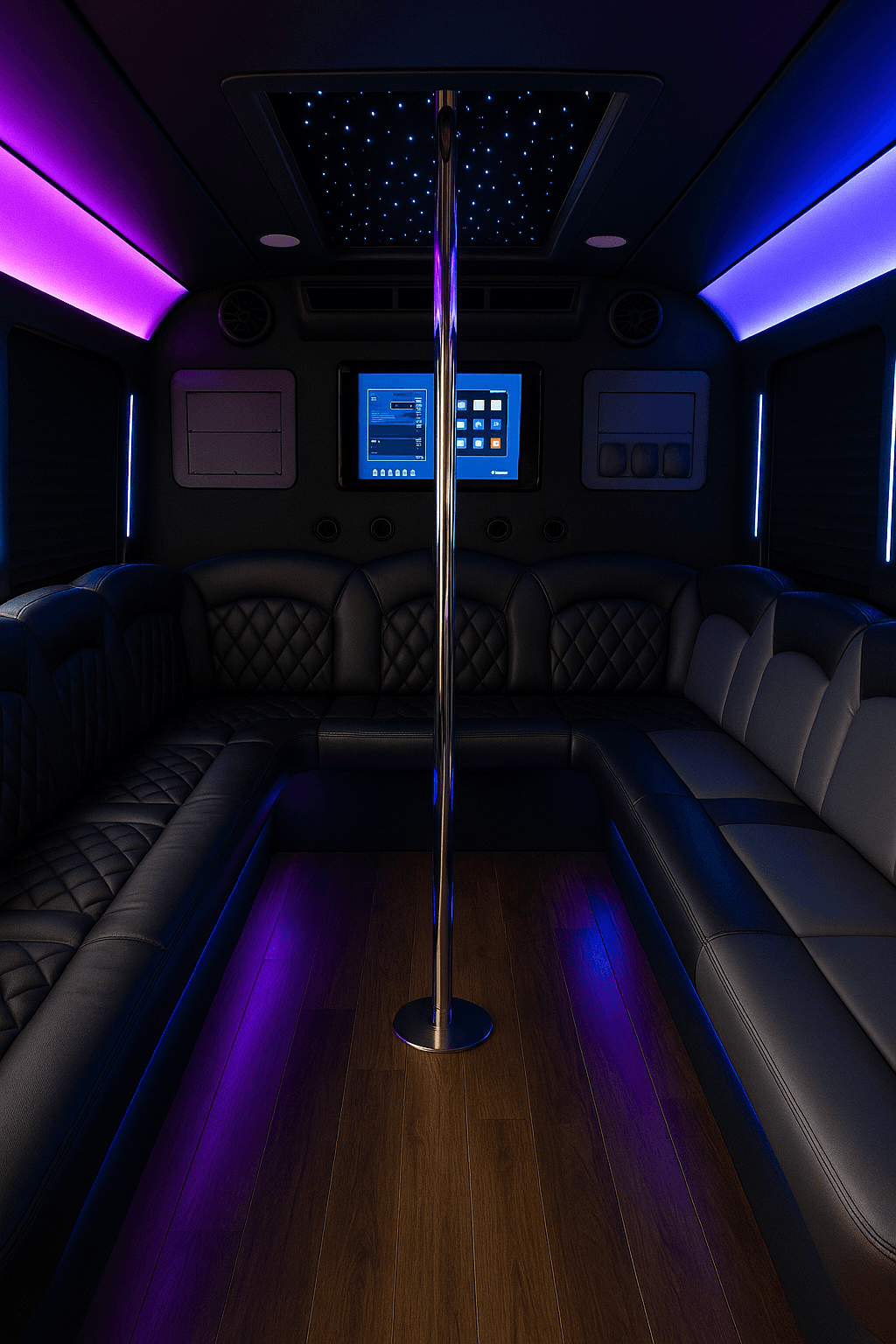
A white stretch limousine is a classic prop for good reason. It bounces soft light back onto the couple, and its length gives a row of bridesmaids or groomsmen something to stand along. Ask the driver to park with the sun behind your shoulder and the door side facing open space, not a wall or a dumpster.
Inside
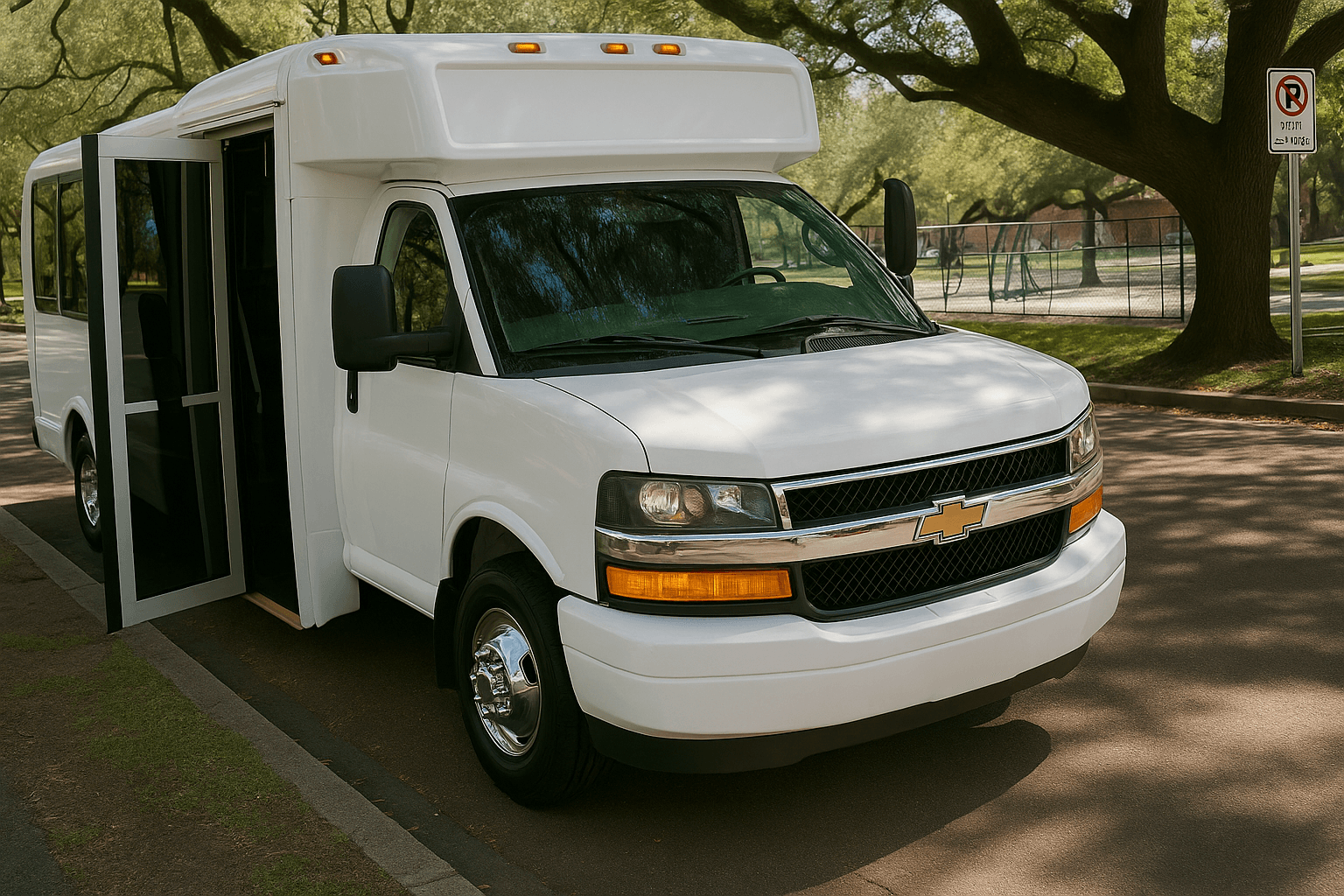
Party bus interiors are dark with saturated LED accents, and magenta and blue on skin is painful to fix later. If the vehicle allows it, ask for a white or neutral setting for portraits and put the color back for the party frames. Not every bus has that option, so raise it before the day.
On an 18-passenger party bus there's room to work from the aisle while the group stays seated around the perimeter. Shoot interiors parked, though. Standing in the aisle with a camera on a moving bus is how you end up in a bridesmaid's lap.
One more thing worth covering: the ride from the ceremony to the reception is often the only unguarded twenty minutes the couple gets all day. Nobody's performing and the adrenaline has dropped. Those tend to be the frames they keep.
First looks, and keeping the dress clean
A first look means two groups who mustn't see each other arriving at the same place. Stagger them by about twenty minutes: one side goes first and gets into position, then the vehicle comes back or a second car brings the other.
Tell the driver where the first look is happening so the vehicle parks out of the sight line. If the two getting-ready sites are far apart, two vehicles are simply easier.
Boarding in a gown takes some thought. Bus steps are steep and parking lots are dusty. Give one person the job of carrying the train, lay a clean sheet where the dress will sit, and board the gown last so it comes off first and nobody steps on it in the aisle. For desert stops, walk in flat shoes and change at the spot.
Friday traffic against golden hour
Friday weddings are common in the Valley and they're a smart choice for a lot of couples. They also change your math, because the drive to a golden-hour location happens between four and six, right in the commute.
A leg that takes twenty minutes on a Saturday can take thirty-five on a Friday, and the sun doesn't wait. For a Friday, either pick a spot on the venue property or a few minutes away, or move the whole portrait block earlier and live with higher sun. Check a realistic number in the drive time calculator before you promise a sunset shot across town.
Riding along, second shooters, and heat
If you're riding with the wedding party, count yourself. Capacity is a hard limit, not a suggestion, and a photographer with two bags takes a seat and a half.
A fourteen-person wedding party plus the couple, a photographer and a planner is eighteen riders, which is a different vehicle from the one quoted for fourteen. Give us the real number.
The second shooter usually shouldn't ride. They're more useful in their own car, reaching the stop five minutes early to scout and catching the vehicle pulling in. That car also gives the team a way to move if the wedding party heads somewhere you aren't going.
Heat matters even in the mild months. An October afternoon can still be hot and makeup doesn't survive it. Keep the vehicle running with the air on during stops so there's somewhere cool to come back to, keep water on board, and shoot the couple first while they're fresh. Let everyone else wait inside until they're called.
For how the photo block fits the rest of the day's schedule, see the planner page, and for the guest side of things, our Phoenix wedding transportation guide.