Why the venue picks the vehicle
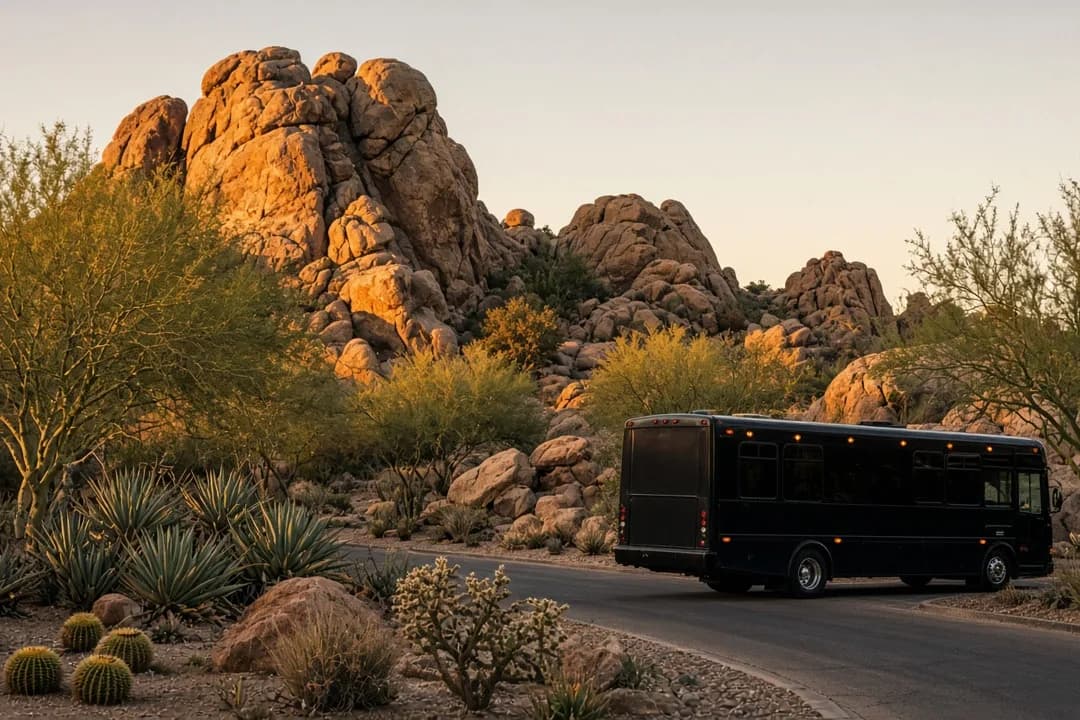
Couples pick a vehicle by headcount. The venue quietly overrules that with a low archway, a tight loop, or four hundred yards of washboard dirt.
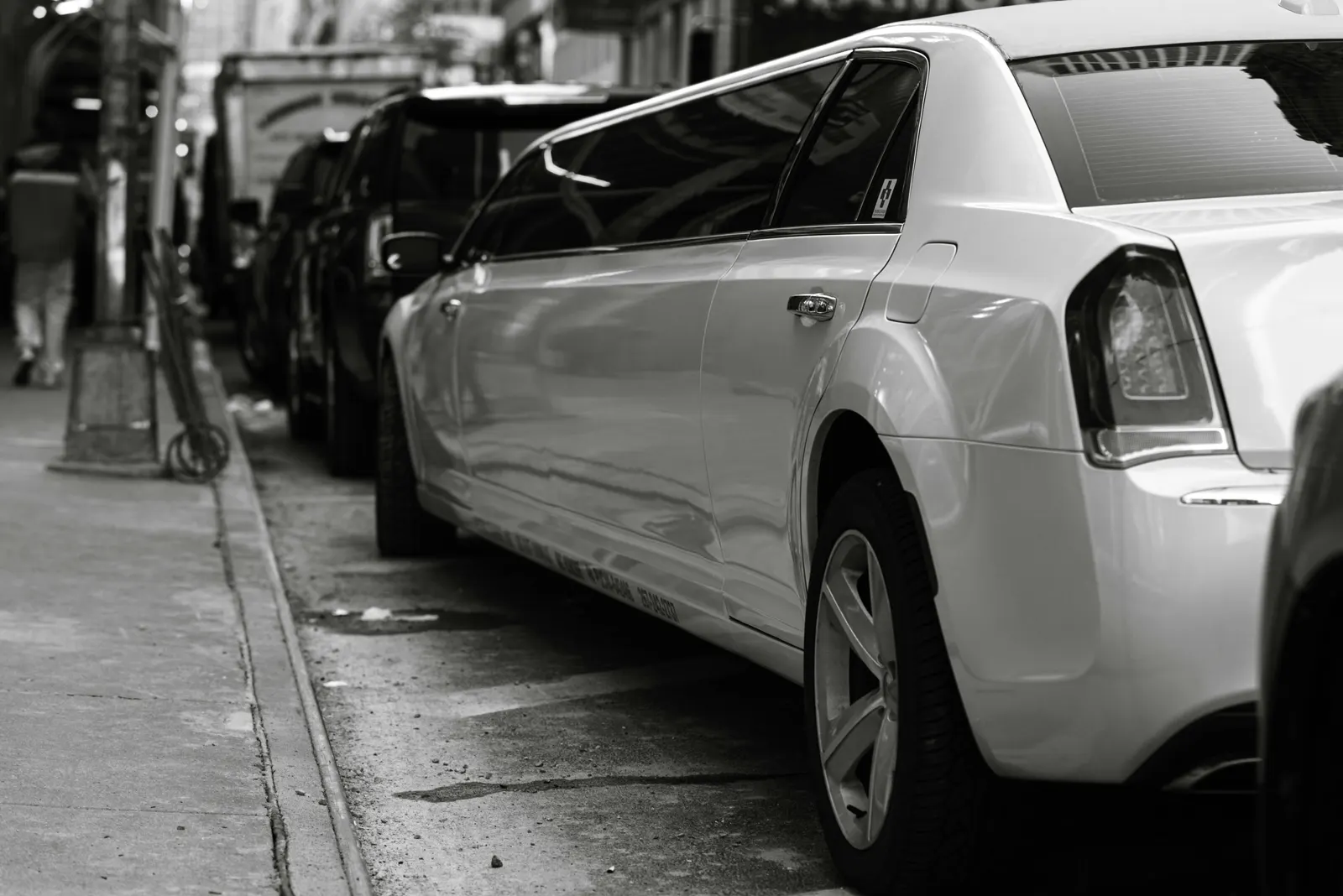
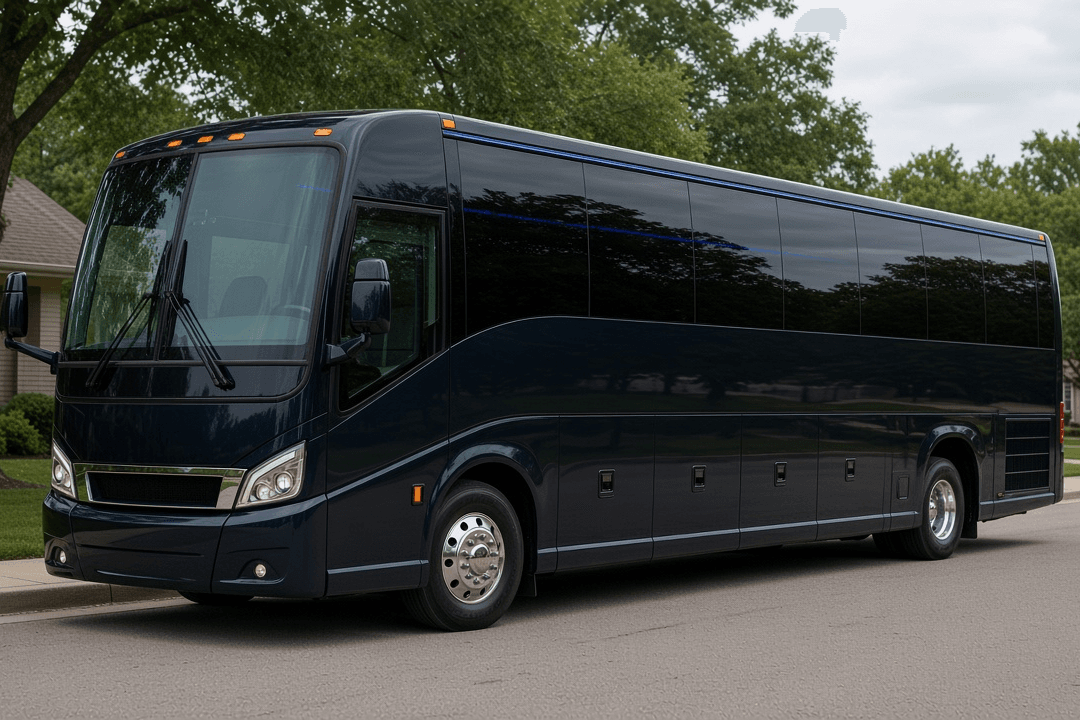
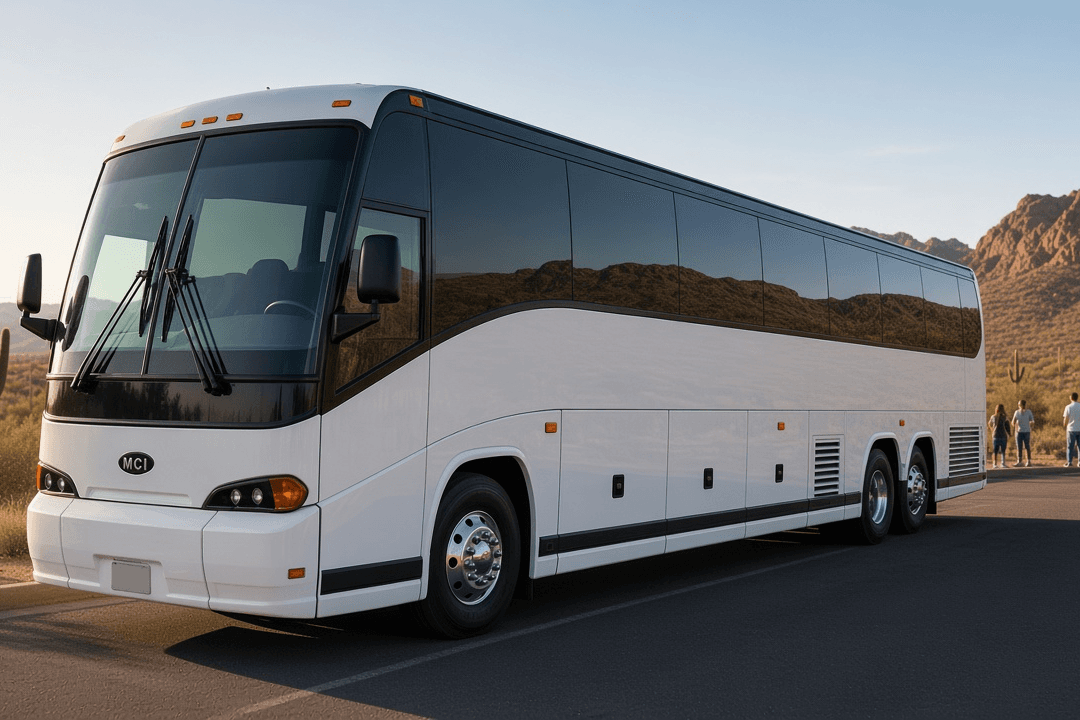
We'd far rather hear about any of those on a Tuesday phone call than at 4:40 with fifty guests aboard. The vehicle arriving at a Valley wedding is often thirty-five to forty-five feet long, and if the property was built for cars and the occasional catering van, that's worth knowing early.
None of this is a reason to reject a venue. Nearly every access problem has a fix: a smaller vehicle doing more runs, a drop at the gate, a golf cart relay. The fix just has to be known in advance and built into the day.
What to ask the venue
Put these to the coordinator by email, so the answers are in writing and you can forward them straight to us.
- Turnaround. Can a full-size coach turn around on the property, or does it back out? What's the longest vehicle that's done it?
- Clearance. Is there a porte-cochère, an entry arch, a gatehouse roof or low limbs on the drive, and what's the posted height?
- Surface. Paved the whole way? If it's gravel or dirt, how far, how steep, and what does rain do to it?
- Gates. Code, guard or call box? Will it be open at the end of the night, or does somebody have to let the bus back in?
- Staging. Where can a bus wait during the event without blocking valet, the fire lane or vendor load-out?
- End time. When does music stop, and when must the last guest be off the property? Those are often two different times.
- Noise. Any rules about idling, or about loading near guest rooms and neighbors late at night?
- Lighting. Is the approach road lit after dark? Is the loading area?
- Step-free route. Where's the closest drop point with no stairs, and how far is it from there to the ceremony seats?
What to look at while you're there
You don't need to know anything about buses to do this. Drive in the way a shuttle would, and pay attention.
- Take the last mile slowly. Count the tight turns, dips and cattle guards. A low wash crossing a sedan floats over will scrape something long.
- Look up. Photograph every arch, canopy and overhanging limb on the drive, with something in frame for scale.
- Find the loop. Stand where guests would step off. Is there room to pull through, or does it dead-end?
- Walk from the drop point to the ceremony. Time it. Note stairs, gravel and grass that heels sink into.
- Come back after dark if you can. A road that's fine at two in the afternoon can be pitch black at ten, with an unlit entrance sign nobody sees.
- Ask where the bus waits, then go look at that spot.
Take the photos with you and send them along with your quote request. A picture of the entrance gate tells us more than a paragraph describing it.
How the problem changes by venue type
Valley wedding venues fall into five rough types, and each comes with its own access headache.
| Venue type | Usual problem | What we do about it |
|---|---|---|
| Resort, Paradise Valley or Scottsdale | Valet loop, canopy height, busy front drive | Use the group entrance. Limos out front, coaches at a side lot |
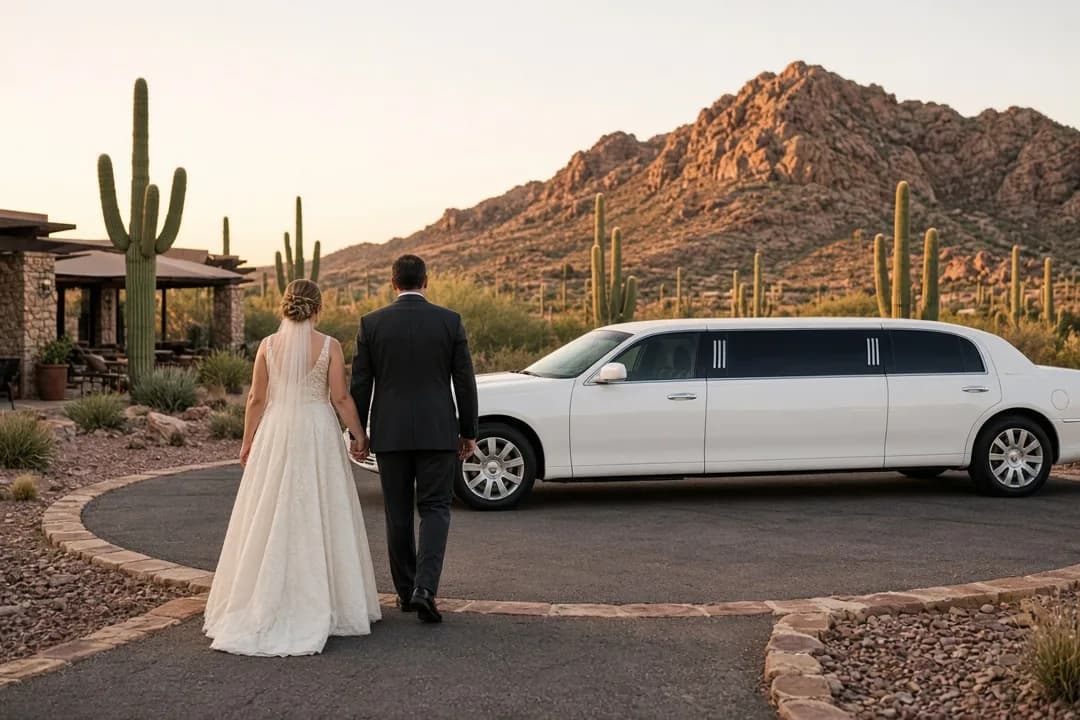
| Desert venue, Carefree or Gold Canyon | Long unlit roads, dirt approach, patchy signal | One large vehicle instead of several small. Pin and gate details sent ahead |
| East Valley farm or garden | Residential streets, tight parking, neighbors | Mid-size bus, quiet loading, engine off while waiting |
| Downtown loft or rooftop | Street loading only, nowhere to stage | Timed curbside drop, vehicle waits elsewhere and returns on a call |
| Public garden or museum | Shared entrance, long walk to the lawn | Drop at the group entrance and build the walk into the schedule |
Resorts with valet loops
Resorts in Paradise Valley and Scottsdale are built around a front drive with a canopy, and those canopies suit cars. Most properties have a separate group or event entrance. Ask for it by name, and ask the resort to tell valet a bus is coming so it doesn't get waved off.
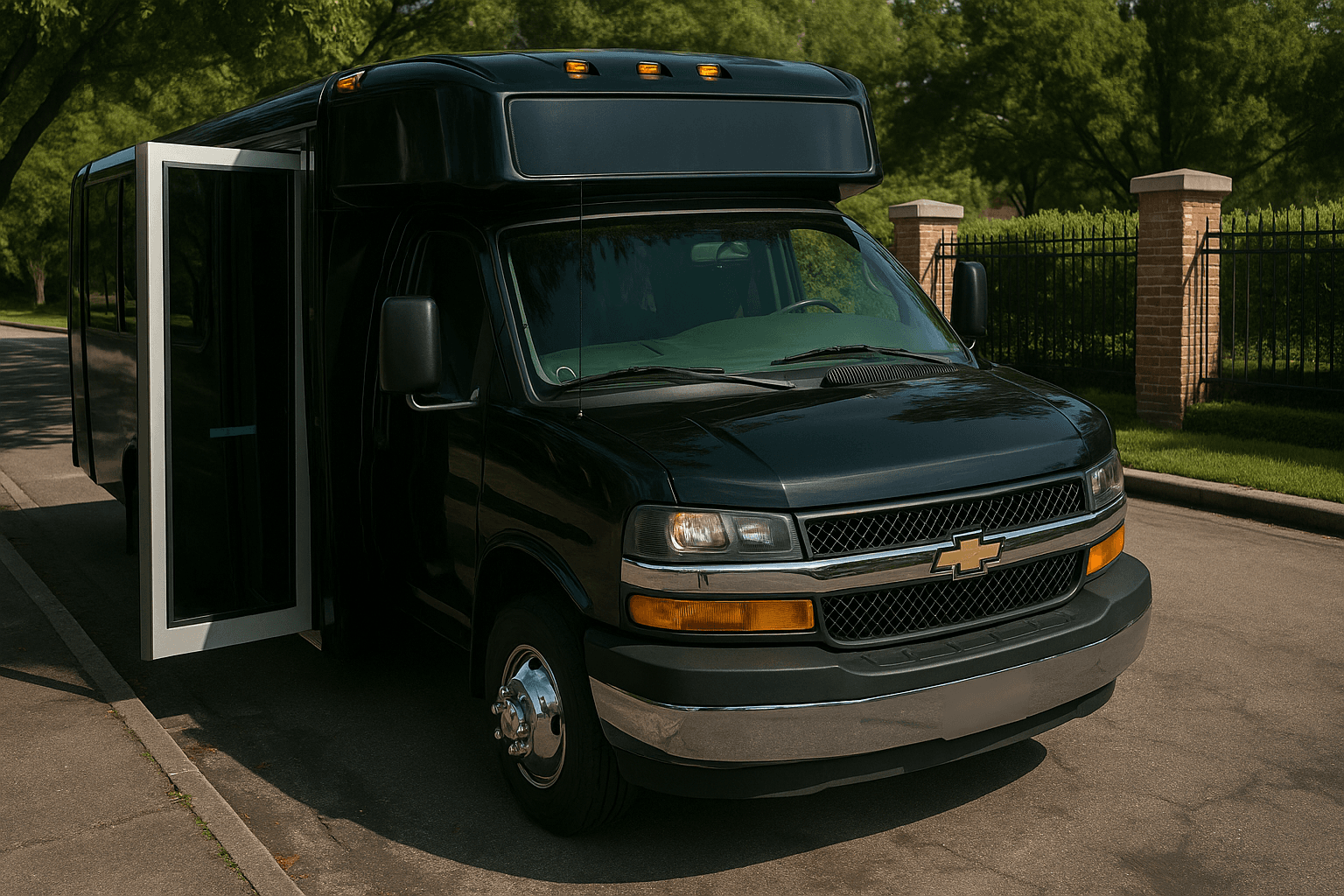
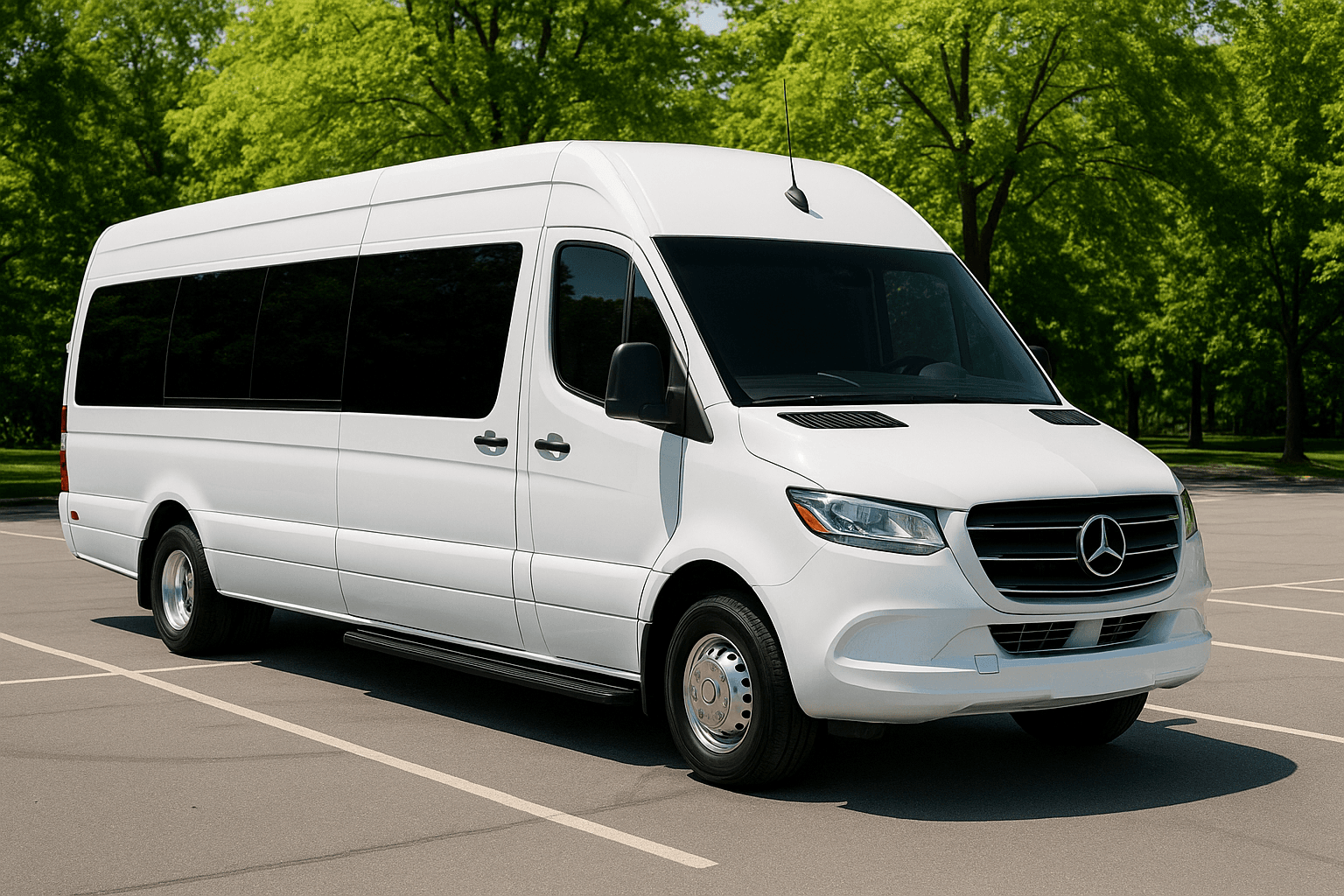
A 20-passenger party bus often fits where a full coach won't, which is one reason some properties are better served by two mid-size vehicles than one big one.
Desert venues on long dark roads
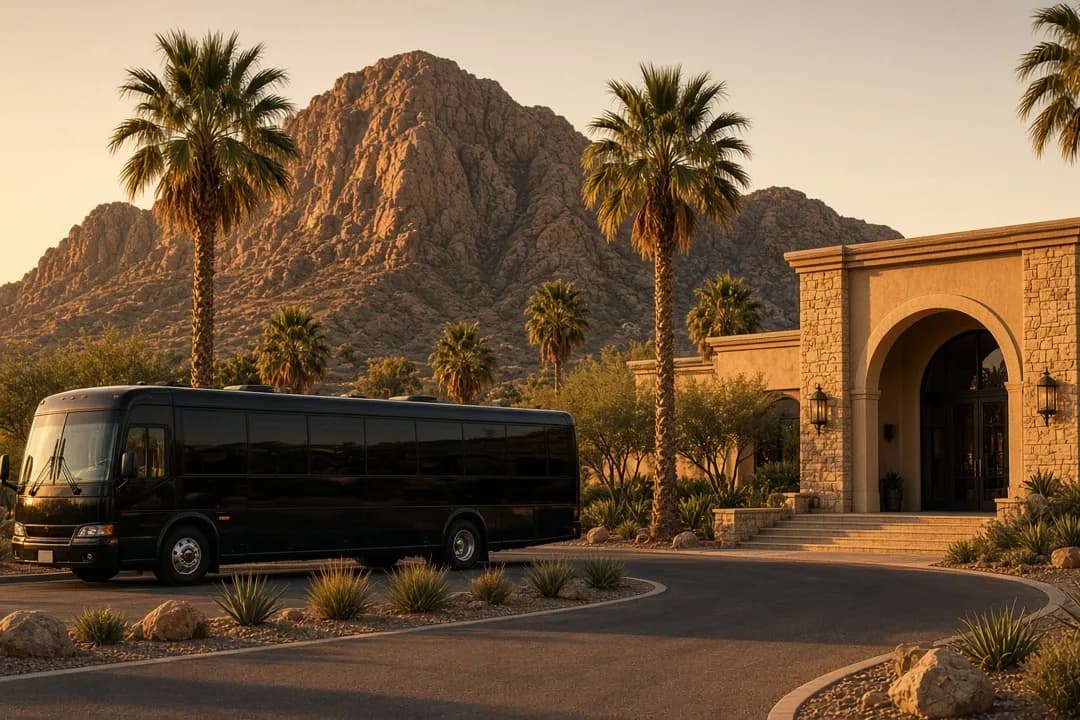
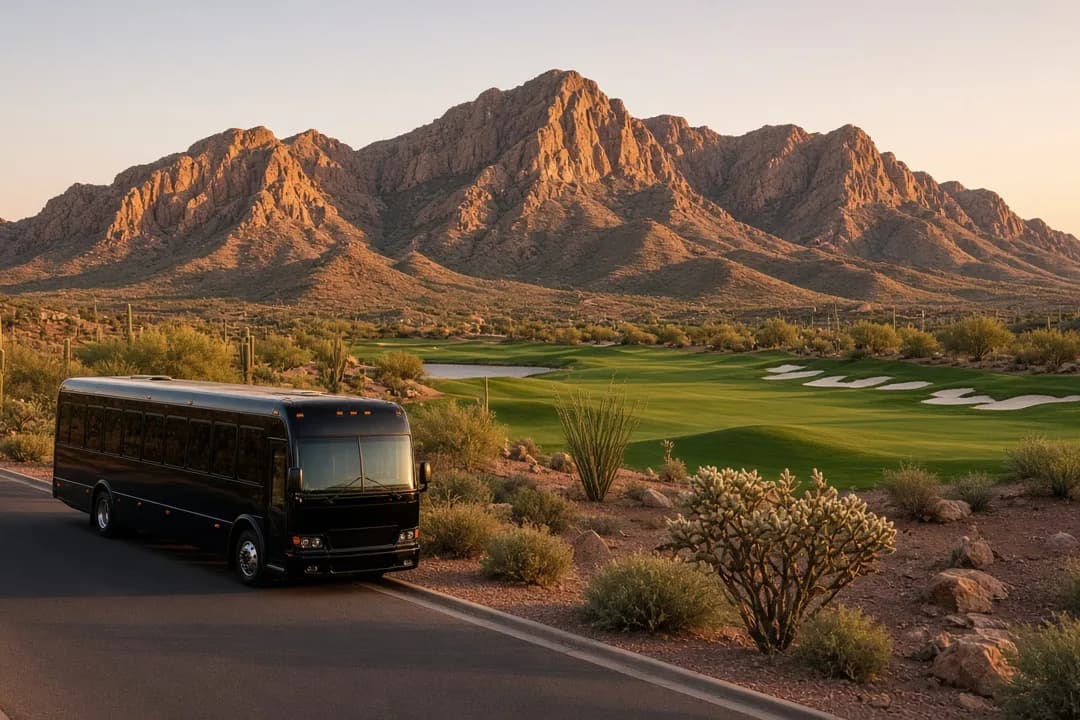
Out past Carefree and Cave Creek, or east toward Gold Canyon under the Superstitions, the last stretch is often unlit and sometimes unpaved.
A driver can handle that. It just takes longer than a mapping app says, and the turnoff is easy to miss at night. A venue helps enormously by putting a lit sign or a staff member at the entrance road for arrivals.
Farms and gardens in the East Valley
Farm and garden venues in Gilbert, Queen Creek and Mesa usually sit among houses, and the access issue is the neighbors. A bus idling on a residential street at half past ten with forty cheerful guests boarding is what produces complaints, and complaints produce stricter venue rules. Load inside the property where you can, and keep the departure brisk.
Downtown lofts and public gardens
Downtown lofts have no driveway at all. The bus stops at the curb, unloads and leaves, then comes back when called, which takes a venue contact who can confirm which curb is legal.
The Desert Botanical Garden is the public-garden case. Wedding guests share an entrance with ordinary visitors, and the event spaces are a walk from where vehicles unload, so that walk has to be in the schedule.
Step-free drop-off
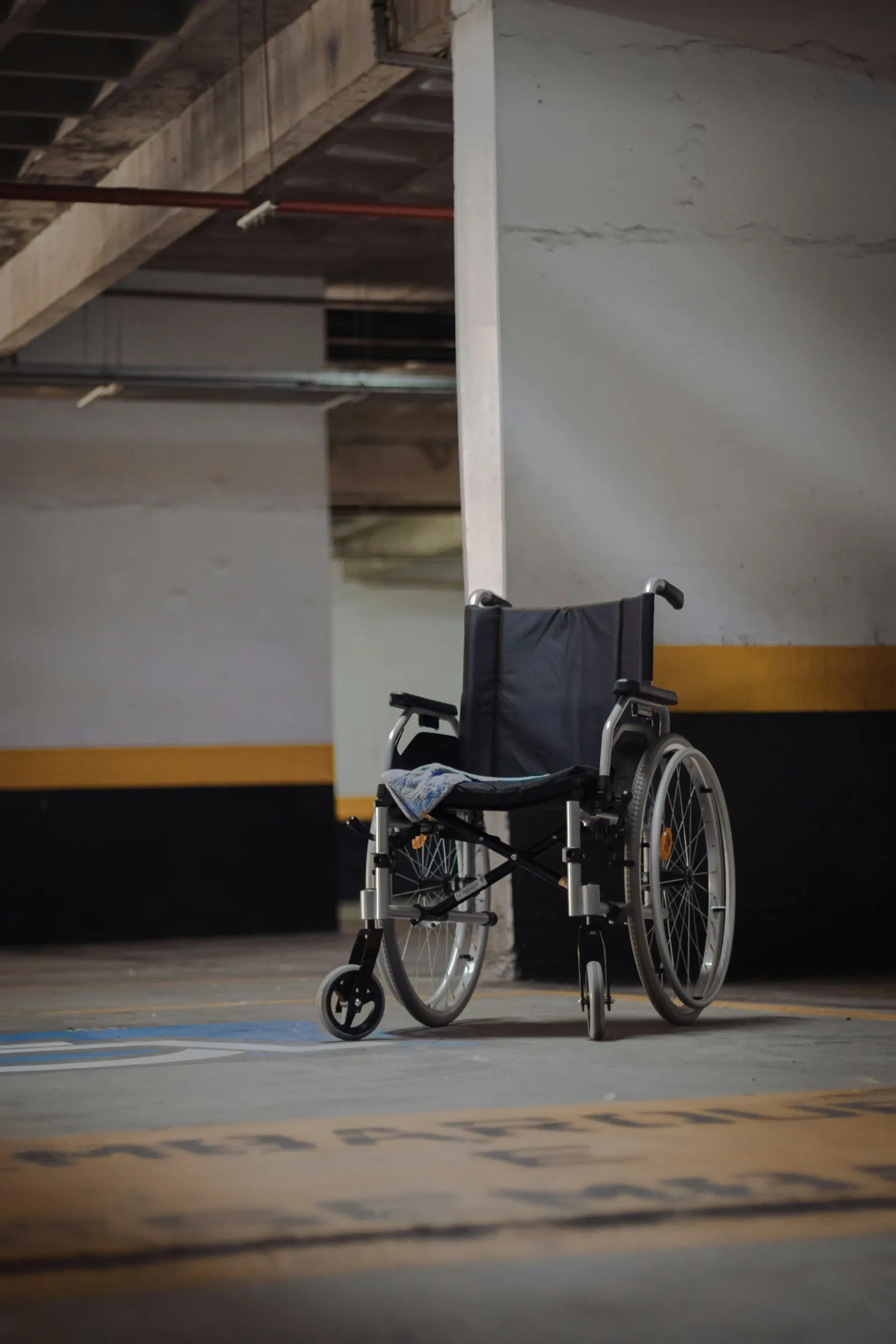
Most weddings have a few guests who can't walk far or manage stairs. Ask the venue where the closest step-free drop point is, and whether a vehicle may use it even when everything else is being sent elsewhere. At desert and farm properties, ask whether a cart is available between there and the ceremony.
On our side, tell us at quote time if anyone uses a wheelchair or can't climb bus steps, and ask what's available for your date. Don't assume a given vehicle has a lift. It's easy to arrange early and very hard to improvise.
Curfews and the last shuttle
Most venues have a hard end time, and many have two: music off, and property clear. Your return plan has to fit between them.
If music ends at ten and the grounds close at half past, the final bus needs to be loading by 10:10, which means it's staged and waiting by 9:50. Work backward from the property-clear time, not the music one.
A single return trip rarely serves everyone. Older relatives and parents of small children want to go after the cake. Friends want the last song. Two departures cover both and keep the final bus from being packed.
The announcement matters as much as the schedule, and the person with the microphone is the one to make it — our page on the DJ and end-of-night timing covers how to set that up.
Tell security a bus is coming
Where a venue has a guard or a gate, give them the vehicle description and the arrival times. A guard who wasn't told about a bus will stop it, correctly, and that delay lands on your ceremony. Late at night they're also your best ally for steering stragglers toward the door.
When the problem is parking, not distance
Some venues have the opposite problem. Guests can drive there fine, but there's nowhere to put seventy cars. The answer is a remote lot and a short loop, and it's a different design from a hotel shuttle.
A lot shuttle runs continuously rather than on fixed departures, because guests trickle in over about forty-five minutes. Two smaller vehicles circulating usually beat one big one, since nobody waits long at either end. The lot needs the owner's permission, lighting and a sign, and it needs the same loop in reverse at the end of the night — that's the half people forget. Put everyone planning to use it into the guest list manager so you know the real number.
One honest warning. A lot shuttle fixes parking. It does not fix the drive home, and nobody who's been drinking should be delivered back to their own driver's seat. Say that plainly to your guests.
What venue coordinators should send us
Coordinators who keep a one-page access sheet make every wedding on their property run better, and most of it is written once and reused forever.
- The right entrance for buses, with a map pin, if it isn't the guest entrance
- The longest and tallest vehicle the property has handled without trouble
- Gate code or guard procedure, including getting back in after hours
- Where vehicles stage during the event
- Music-off time and property-clear time
- Any idling, noise or loading restrictions
- The step-free drop point and the route from it
- A contact who will answer a mobile phone during the event
Timing helps too. Couples usually come to us about eleven weeks out, and groups needing a full coach start earlier than that, so the venue's access details are most useful right when the contract is signed. Hand the sheet over then and the couple can include it in their first request. We'll quote a 56-passenger coach bus or two smaller vehicles based on what the property can actually take, instead of guessing.
Big vehicles are a small share of any fleet, so when a venue's access rules out a full coach, the alternatives are mid-size buses — and those go early in November, March and October. For how this fits with everything else, start from the wedding transportation overview, and our Phoenix wedding transportation guide has the shuttle seat counts.