Why one vehicle beats seven cars
A reunion of 35 people in rental cars is seven drivers, seven parking spots at every stop, and seven chances for somebody to miss the turn for the Chapel of the Holy Cross.
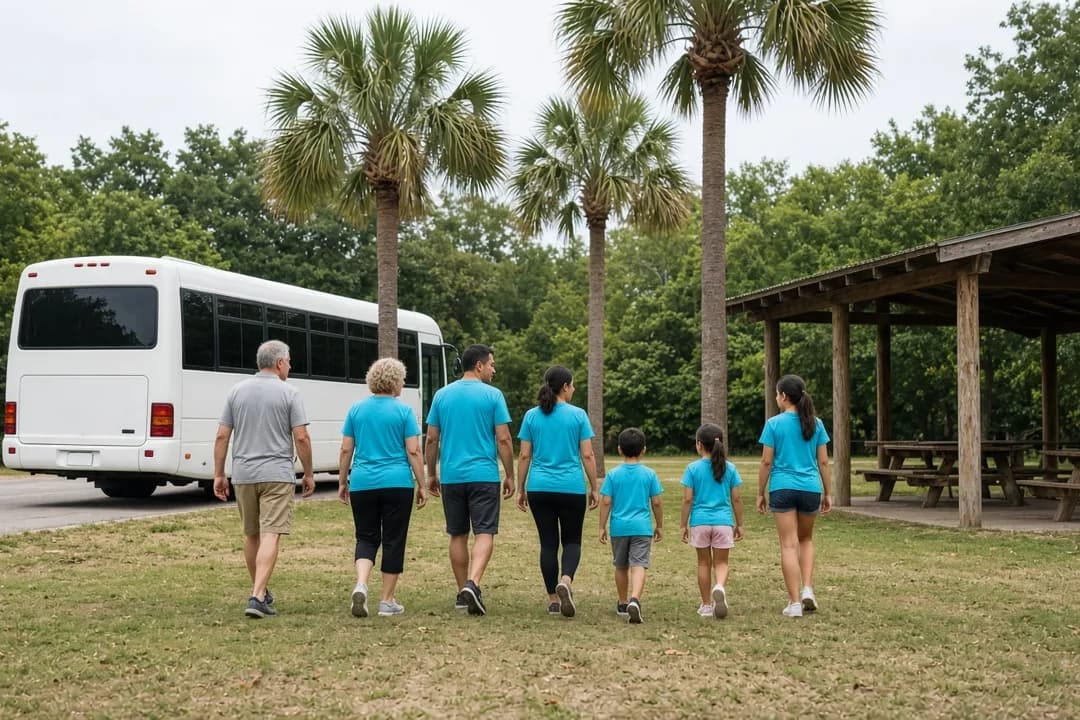
Put the same people on one coach and the day changes shape. Grandparents sit with grandkids. The cousins who see each other every five years get four hours of talking. Nobody has to stay sharp on a mountain highway after a big lunch.
This guide is for those groups: family reunions, church groups, company offsites, and out-of-state relatives who want to see more of Arizona than the resort pool. It's a different animal from a night out in the Valley. Most trips we quote are four hours. A run to the high country is eight to fourteen, so it gets planned and priced differently from the first phone call.
Six trips, side by side
| Destination | One-way drive (rough) | Realistic total day | Best vehicle |
|---|---|---|---|
| Superstitions, Goldfield, Tortilla Flat | 45 to 75 minutes | 5 to 7 hours | Sprinter or mid-size coach |
| Montezuma Castle and Verde Valley | About 1.5 hours | 7 to 9 hours | Any coach |
| Tucson, Saguaro National Park | About 1.75 hours | 8 to 10 hours | Any coach |
| Prescott | About 2 hours | 8 to 9 hours | Any coach |
| Sedona | About 2 hours | 9 to 11 hours | Coach, or Sprinters for tight sites |
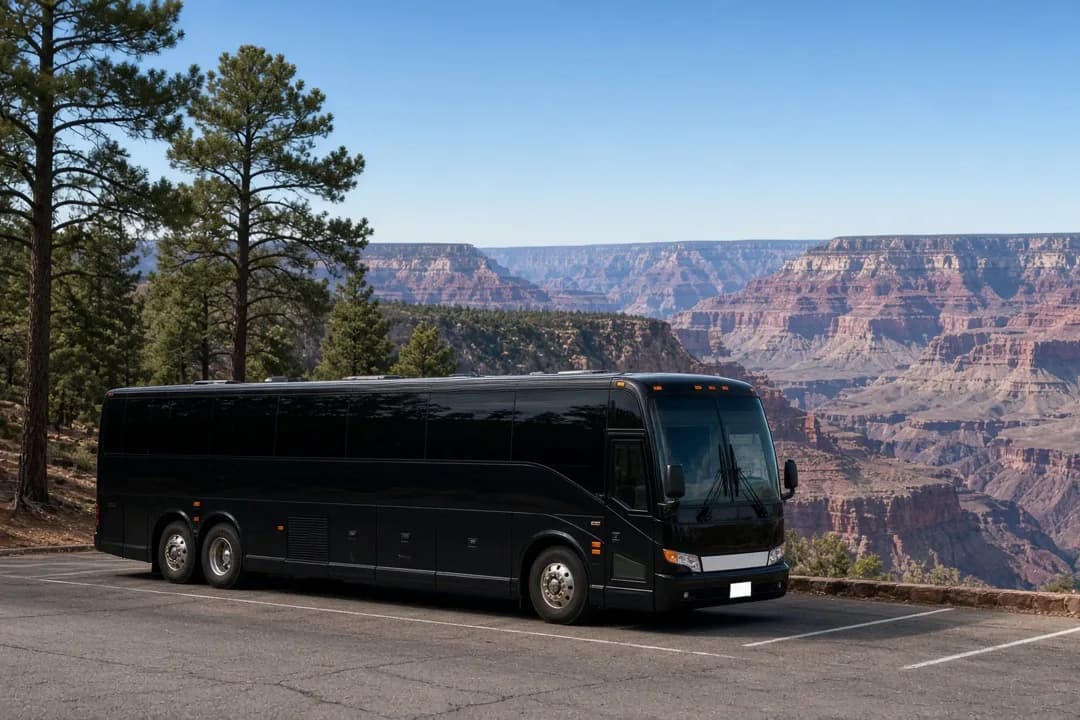
| Grand Canyon South Rim | About 3.5 hours | 13 to 14 hours, or overnight | Full-size coach |
Those are from central Phoenix in normal traffic. A pickup in Surprise adds time to anything east or south. A pickup in Anthem shortens everything north.
Sedona
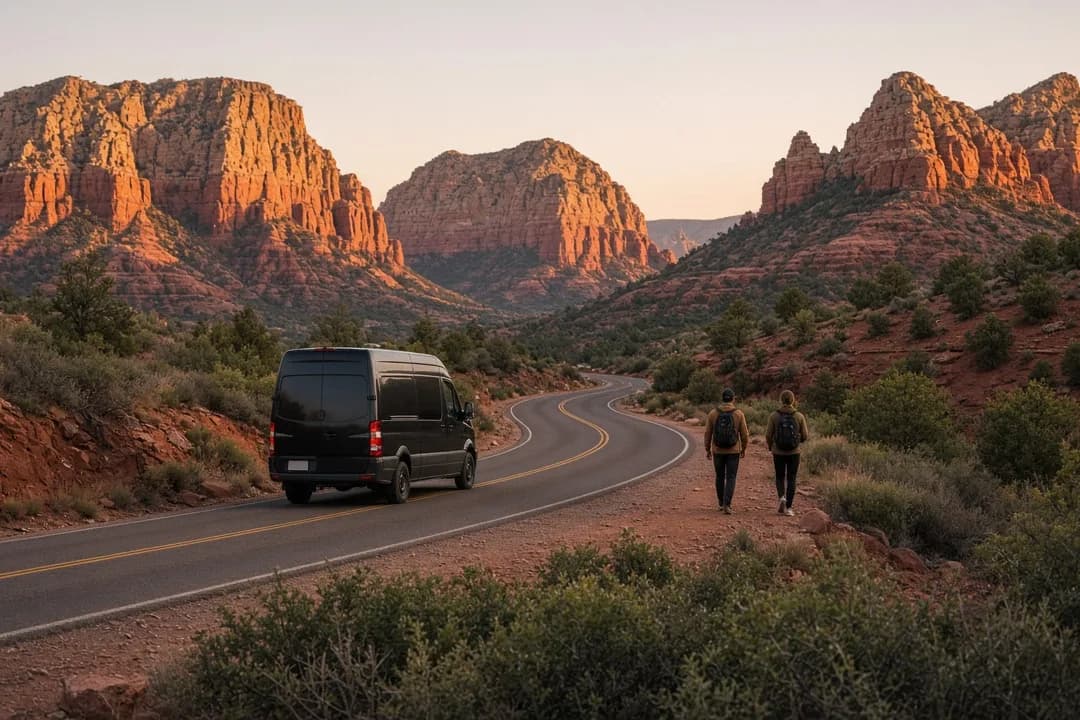
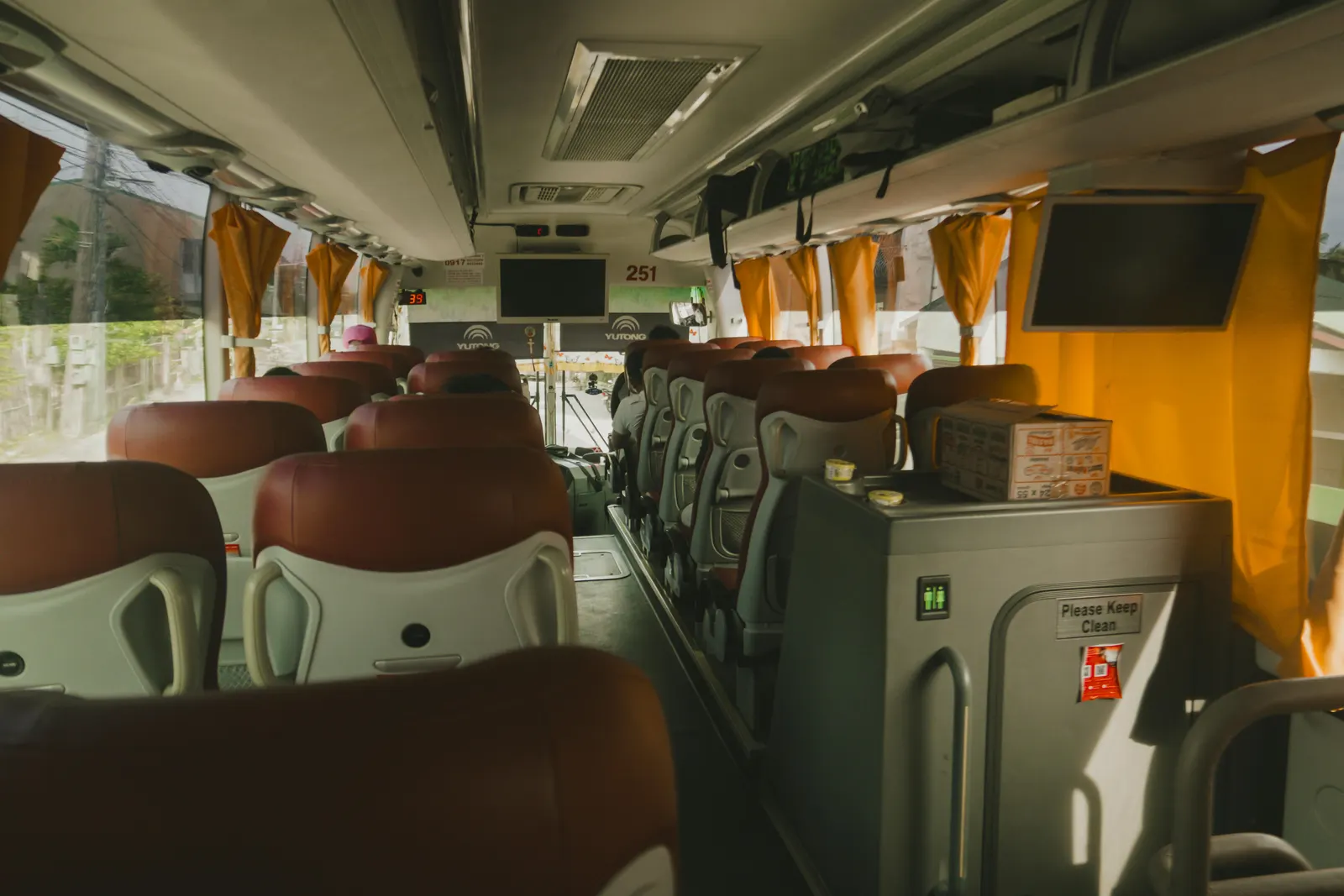
Sedona is the trip visitors ask for first, and it earns it. You take I-17 north, then SR 179 through the Village of Oak Creek, where the red rock starts showing up before you've reached town.
A good group day is a scenic pullout on 179, the Chapel of the Holy Cross, lunch, then a couple of free hours at Tlaquepaque, the arts village built around shaded courtyards beside Oak Creek. Our Sedona day trip page goes further into stop choices.
The one real planning issue is parking. Sedona is a small town with a lot of visitors, and some sites are tight for a full-size coach. The chapel road and a few trailhead lots are the usual pinch points. Ask us when you request your quote. Depending on your head count, the answer might be a designated drop-off, a shorter coach, or two Sprinters instead of one big bus.
Sedona also sits next door to the Verde Valley tasting rooms. If wine is the actual point of the day, that's a different trip, and it's covered in our Arizona wine country guide.
Grand Canyon South Rim
You can do the South Rim in a day. You should know what that day looks like before you promise it to anyone.
It's about three and a half hours each way, up I-17 to Flagstaff and across, or around through Williams. So: a 6:00 a.m. departure, arrival late morning, four hours or so along the rim and in Grand Canyon Village, and home around 8:00 p.m. Seven of those hours are spent riding.
For school-age kids and fit adults that's a big, memorable day. For a group with a lot of seniors or small children, an overnight in Flagstaff, Williams or Tusayan is kinder, and it buys you sunrise or sunset at the rim, which is when the canyon looks like the photographs.
One thing shapes the itinerary either way. Commercial drivers work under federal limits on driving and on-duty hours, so on a trip this long we build the schedule around them at quote time. That's why we ask for your real plan up front rather than a rough idea. More on our Grand Canyon trip page.
Park entry for a commercial vehicle works differently from the car rate, and each park sets its own. Ask us at quote time and we'll sort it out well before anyone is sitting at the entrance gate.
The Superstitions and Tortilla Flat
This is the short one, and it's the right call when you've got half a day or a group that doesn't want a long ride.
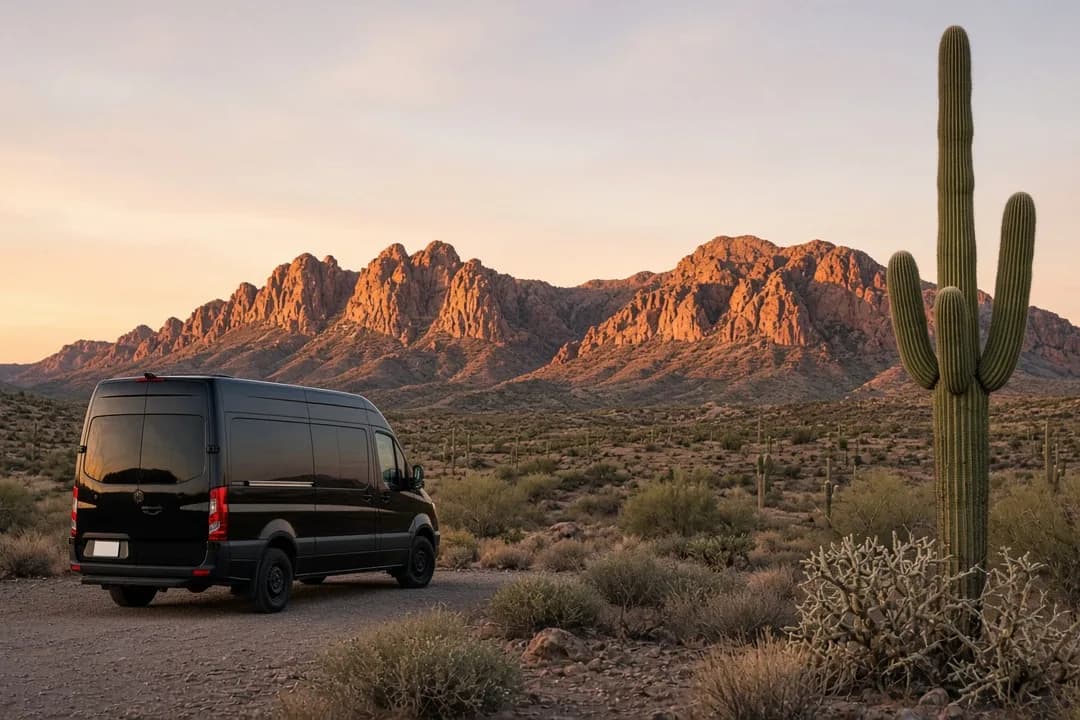
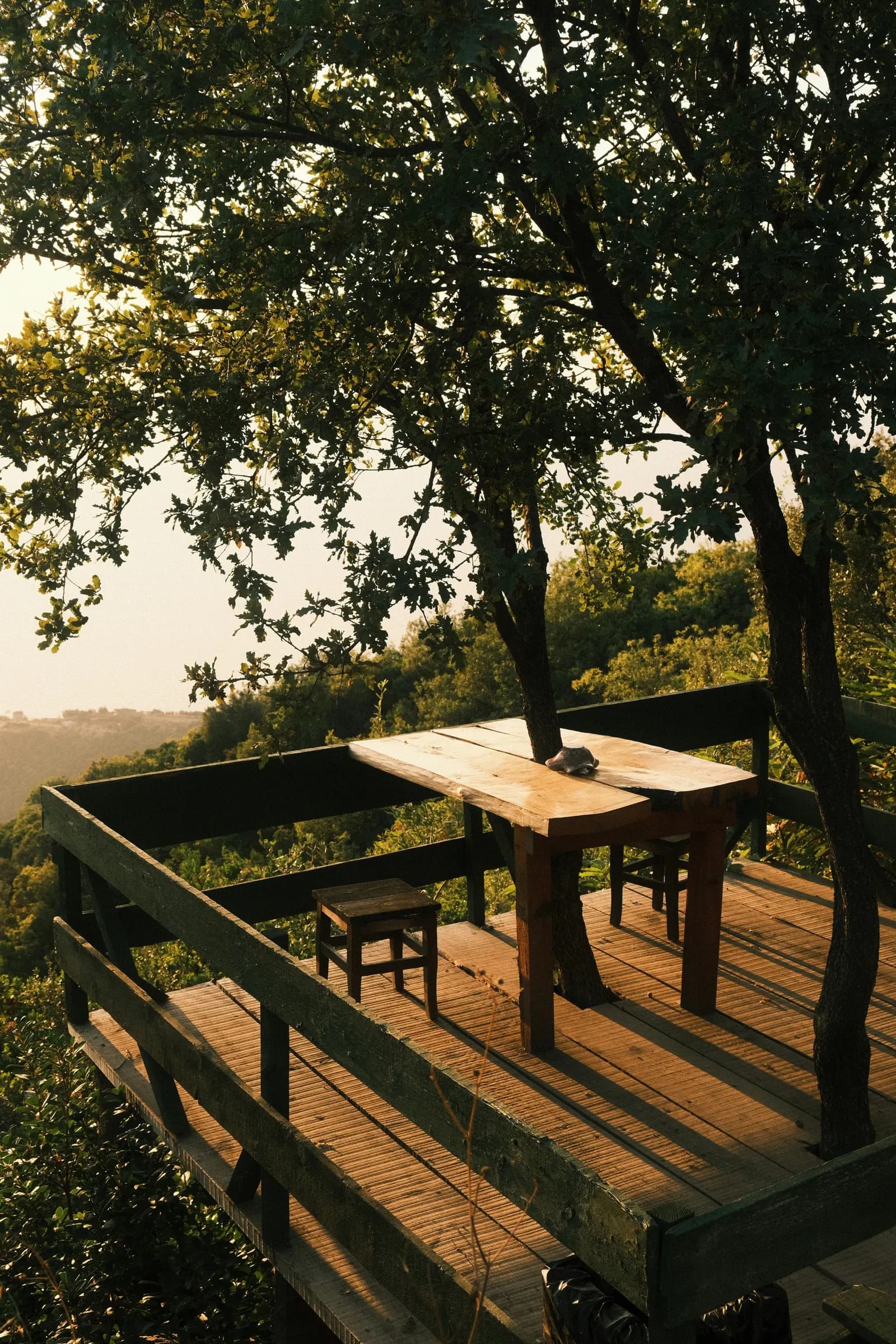
Head east through Apache Junction and the Superstition Mountains fill the windshield. The usual stops are Goldfield Ghost Town, the Lost Dutchman area at the base of the range, the Canyon Lake overlooks, and Tortilla Flat, the old stagecoach stop that now feeds day-trippers lunch.
A word about the road. The Apache Trail, SR 88, is paved as far as Tortilla Flat, and that stretch is winding, with one-lane bridges and steep drop-offs. Past Tortilla Flat, parts of the route are unpaved and have been closed for long stretches after storm and fire damage. Large vehicles stay on the pavement, and we plan the route and the size around the road as it is that season. Don't promise your group the full historic loop to Roosevelt Lake.
Saguaro Lake, reached from the Mesa side on the Bush Highway, is a separate short outing with the same mountain backdrop, and it goes nicely with a late lunch in Fountain Hills. For shorter scenic runs like these, see our desert tour page.
Montezuma Castle, Tucson and Prescott
Montezuma Castle
A cliff dwelling set high in a limestone wall, a few minutes off I-17 near Camp Verde. The path is short, flat and paved, which makes it one of the friendliest stops in the state for older riders. An hour is plenty. Pair it with lunch in Camp Verde or Cottonwood, or use it to stretch legs on the way to Sedona.
Tucson and Saguaro National Park
About an hour and three quarters down I-10. Saguaro National Park has two districts, one on each side of the city, and both give you a scenic loop drive and short walks through dense stands of giant saguaros. Ask us which loop suits your vehicle, since some park roads have size limits. Tucson's restaurants make lunch a highlight rather than a pit stop.
Prescott
Prescott sits around 5,400 feet among pines and granite boulders. The courthouse plaza and Whiskey Row give a group a walkable downtown with shops, restaurants and shade. It's an easy day: two hours up, four hours in town, two hours back, and nobody needs hiking boots. In July it can be twenty degrees cooler than home.
Picking the coach, and when to reserve
Big groups have fewer options than small ones, and they usually know it. Only about one Phoenix inquiry in five is for more than twenty people, so large vehicles are a smaller slice of anyone's fleet. Groups of forty-plus tend to call us about three times earlier than groups of ten, and two months of runway is normal.
Season matters as much as size. Nearly half the dates people ask us about fall between February and May, which is also the best weather for every trip on this list. Spring Saturdays go first.
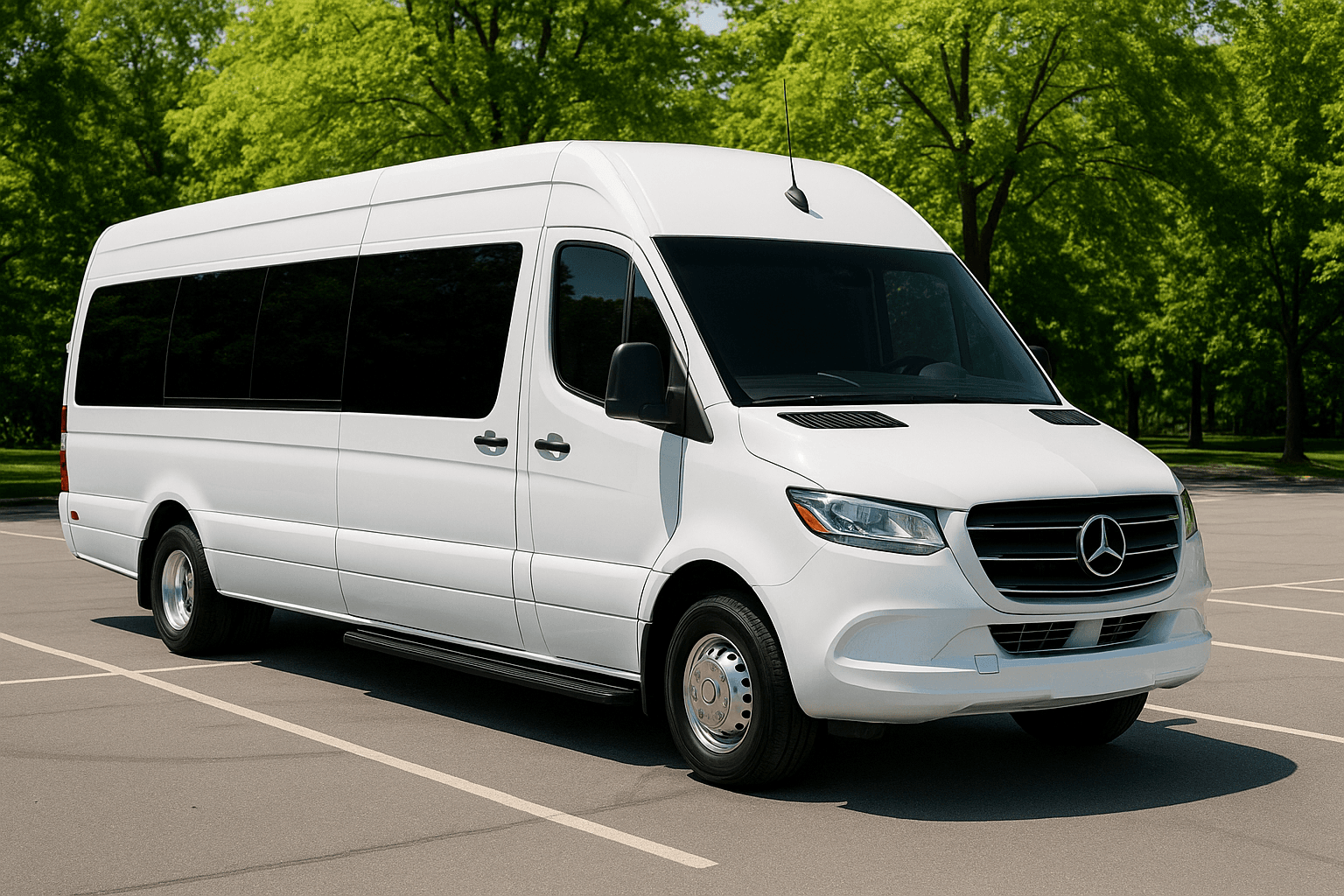
- Up to 14: the 14-passenger executive Sprinter has forward-facing seats, fits almost any lot in Sedona, and handles the paved Apache Trail comfortably.
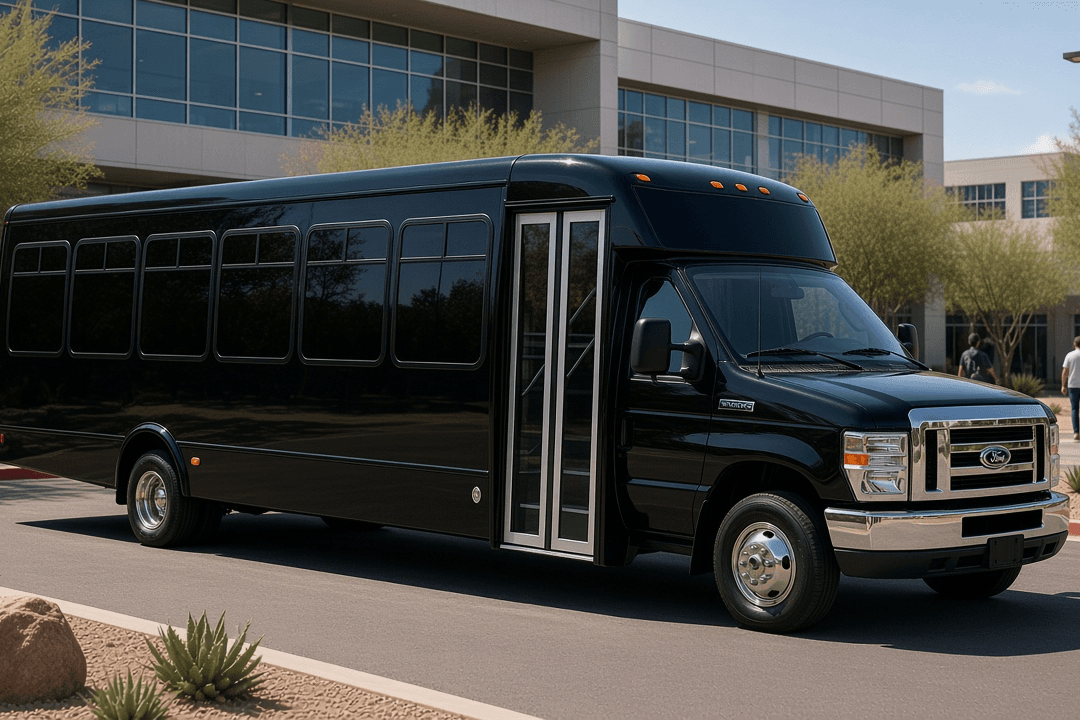
- 20 to 30: the 30-passenger coach bus suits extended families and department offsites, and still fits most attraction lots.
- 30 to 40: the 40-passenger coach bus is the usual church group and reunion size.
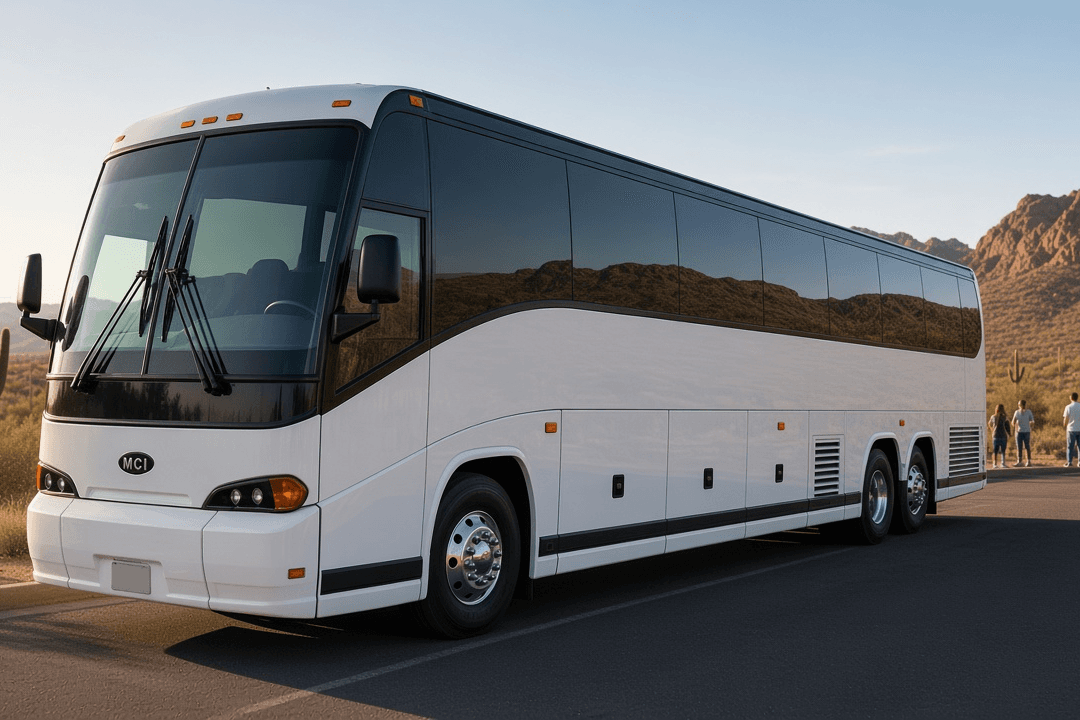
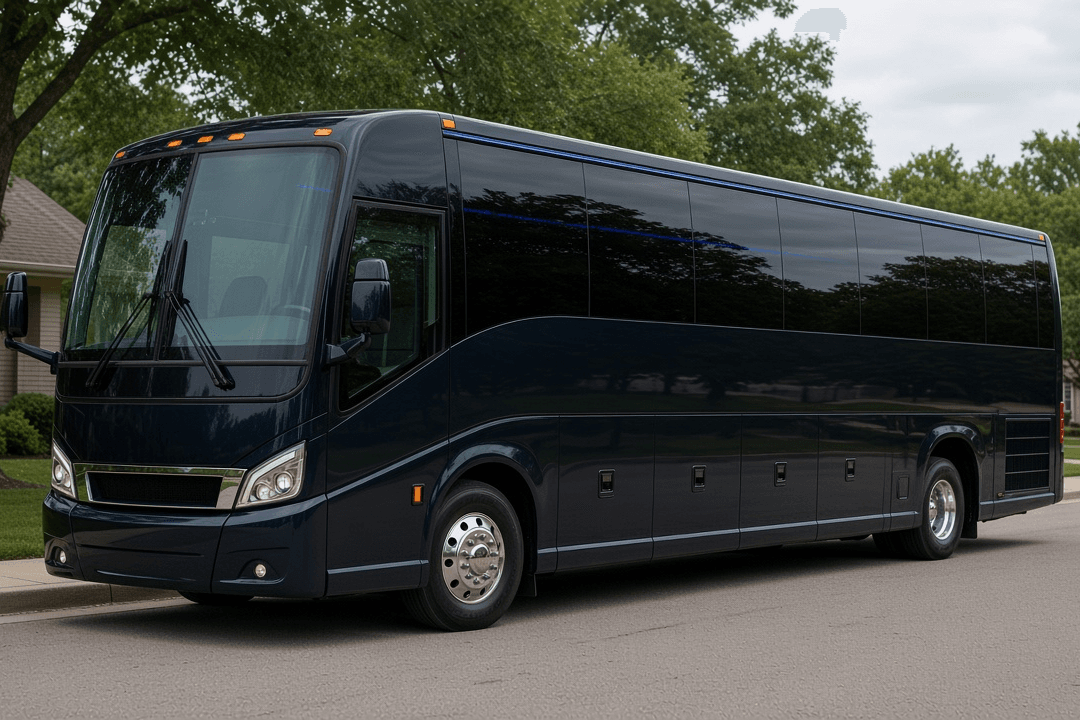
- 40 and up: the 56-passenger coach bus keeps a whole tour group together for the highway runs to Tucson, Prescott and the canyon.
If the day is really a working offsite, our corporate retreat transportation page covers multi-day and multi-vehicle plans.
Which season, and what to pack
Arizona has two travel seasons and they point in opposite directions. From about October through April the low desert is at its best, so that's the window for the Superstitions, Saguaro Lake and Tucson. From May through September the desert floor is brutal by late morning, and the smart trips climb: Prescott, Sedona, Flagstaff, the canyon.
Summer is also when you'll have the widest choice of vehicles, since it's our quietest quarter. Plan desert stops for early morning, keep the coach cold, and check the Phoenix weather checker the week of your trip. Monsoon storms from July into September bring dust, heavy rain and flooded washes with very little warning.
Elevation decides the packing list. The South Rim is near 7,000 feet, Prescott about 5,400, Sedona about 4,300. You can leave a 75-degree Phoenix morning in January and find snow on the ground at the canyon.
So tell every rider to bring a warm layer for anything north of Camp Verde, plus a hat, sunscreen and closed-toe shoes. People tire and dehydrate faster at altitude, seniors especially, so keep the walking modest and the water coming.
Restrooms, coolers and lunch for forty
Restrooms and rest stops
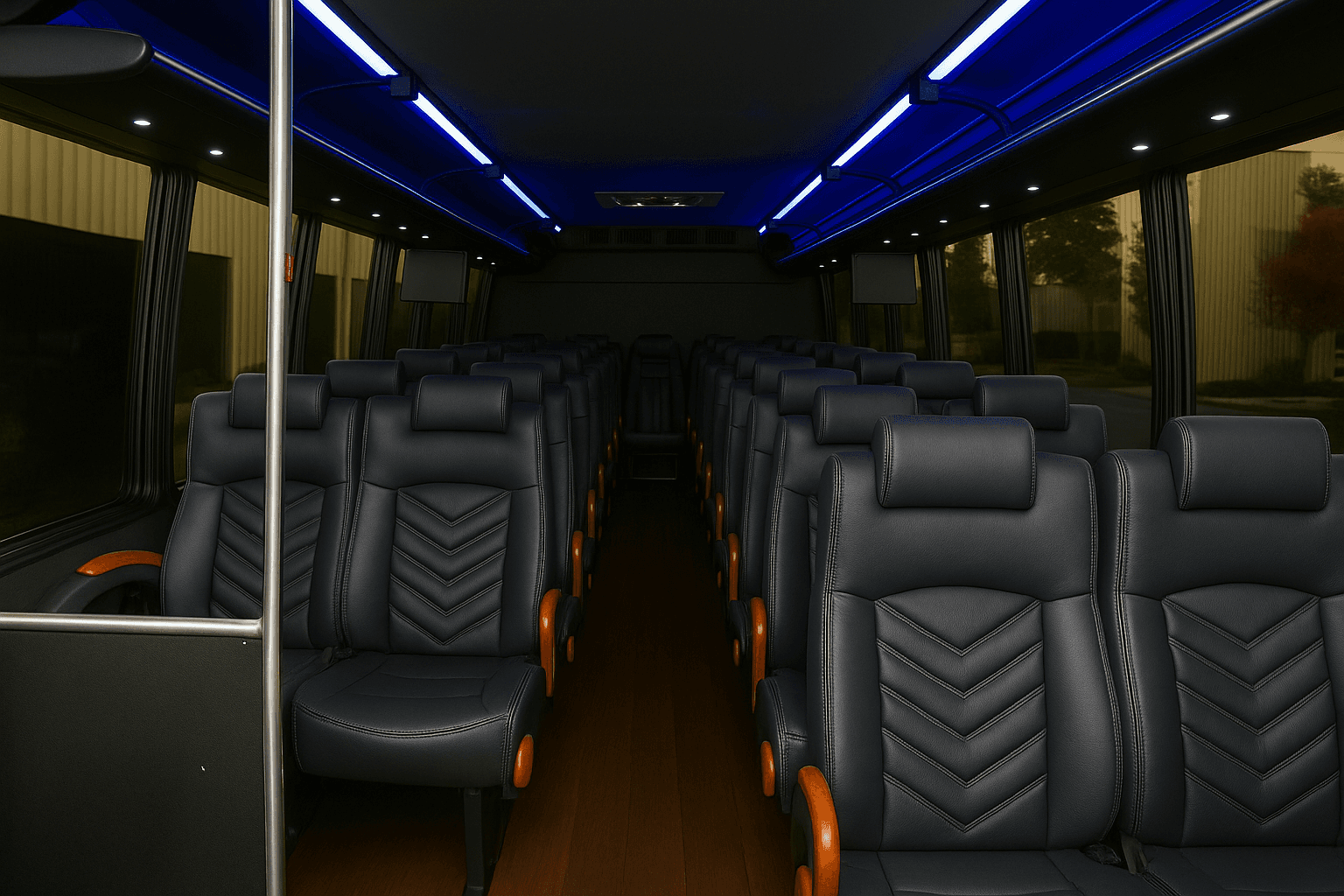
Ask which coaches have a restroom when you request your quote. Not every vehicle does, and on a three-hour leg with seniors or young kids it can decide which one you want. Either way we build rest stops into the route. Sunset Point on I-17 is the standard break heading north, and there are good options on I-10 toward Tucson.
Coolers, bags and gear
Tell us what you're bringing. Full-size coaches generally have underfloor storage for coolers, folding chairs, strollers and walkers, and Sprinters have much less room. A picnic for forty is a real amount of cargo, and it's far easier to plan the space than to find it at 7:00 a.m. in somebody's driveway.
Anyone who needs an easier day
If someone in the group uses a wheelchair, struggles with steps or can't walk far, say so early. We'll talk through vehicle options and steer the itinerary toward short, paved paths. Montezuma Castle, the Tlaquepaque courtyards, Prescott's courthouse plaza and the paved sections of the South Rim trail all work well. Put those riders in the front rows.
Feeding a big group
No small-town restaurant seats 45 walk-ins at noon. You have three workable options: reserve weeks ahead with a set menu, split across two or three restaurants in a walkable spot like Tlaquepaque or Whiskey Row, or bring boxed lunches and use a park ramada. Decide before you ask for the quote, because lunch changes how long the stop runs.
When you're ready to send us the trip, have these on hand:
- Final head count, including kids and anyone who needs help boarding.
- Pickup and drop-off addresses, and whether cars can be left at the pickup lot.
- Your lunch plan, and any reservation you've already made.
- Cargo list: coolers, chairs, strollers, mobility devices.
- Whether an overnight is on the table for the Grand Canyon.