What each season feels like here
Phoenix has two lovely seasons, one hot one, and a stormy stretch inside the hot one. Group plans follow that almost exactly. April is our busiest month by a good margin, and June through August together barely add up to one fifth of the year's requested dates.
The reason is on the thermometer. April sits around 85°F, May climbs to 94°F, and then June, July and August all live at 104°F or above, with September still touching 100°F. People book their outdoor weddings, golf trips and patio nights for the months when standing outside is pleasant.
There's an upside to that. In summer, far fewer groups are competing for the same vehicles, so you usually have more sizes to pick from. In April, plan earlier than feels necessary.
When it's too hot to walk between bars
A summer night out here works fine as long as the schedule respects the heat. The whole trick is that nobody stands outside for long.
- Start later. The sun goes down around 7:30 in June and July. Picking up at or after sunset takes the worst of it off, though July nights still sit in the mid-80s.
- Go door to door. Pick stops where we can pull right up to the entrance. Curbside drop-off is half the reason to have a driver in July.
- Ask for a cooled cabin. Mention it when you request your quote and we'll talk about having the air running before we arrive.
- Don't wait on asphalt. Keep everyone inside until the bus is actually there. Parking lots stay hot long after dark.
- Bring water for everyone. Especially if there's drinking, and anyone drinking on board has to be 21 or older. The drink calculator helps with quantities.
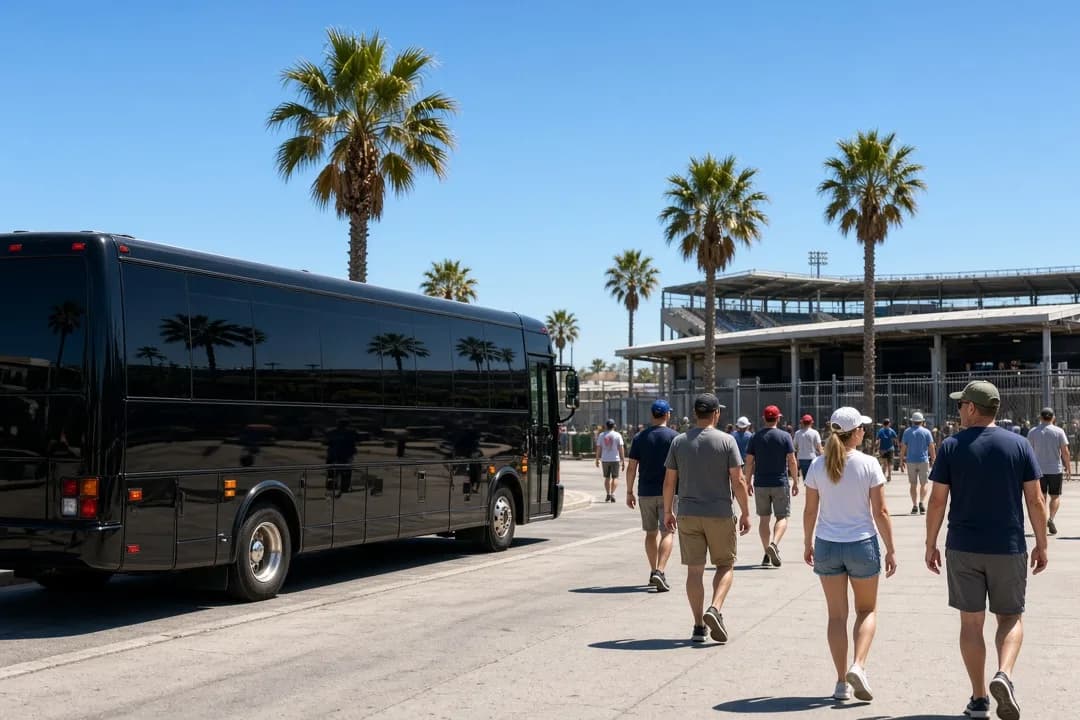
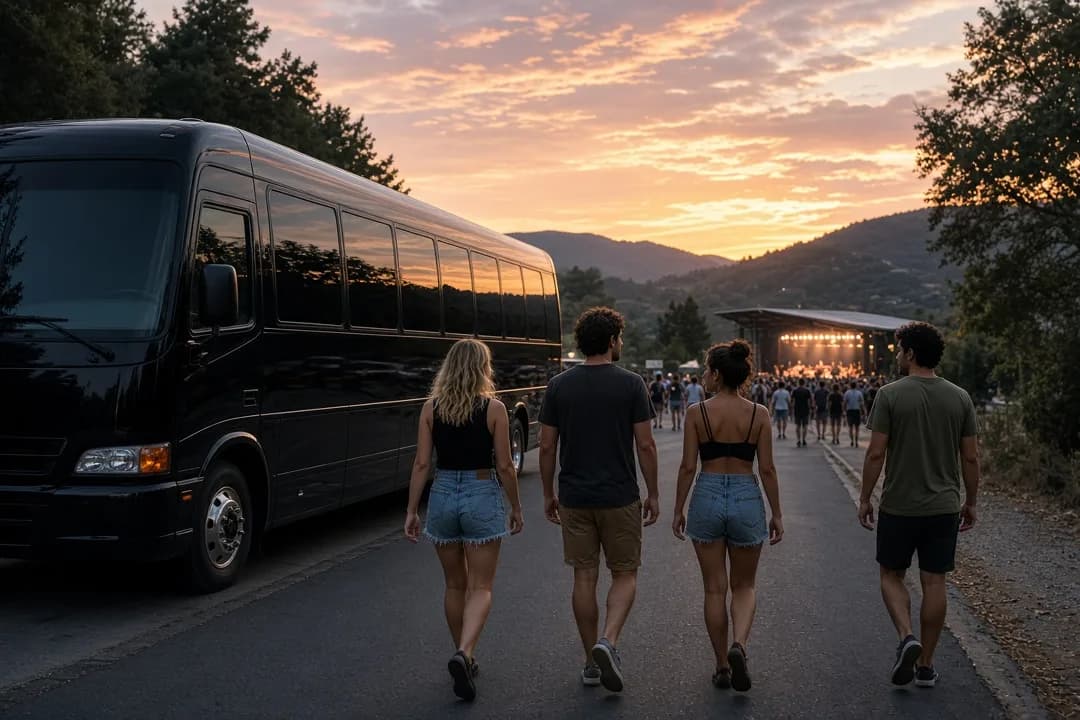
Late summer is also tour season, and nearly a quarter of our concert and festival requests are for August dates. That's exactly when a cooled ride to the venue door earns its keep. See concert transportation for how drop-offs work.
What monsoon season does to a night out
Monsoon season officially runs June 15 through September 30, and most of the drama lands in July and August. Storms build in the late afternoon and evening, which is exactly when group trips start.
Three things can affect your ride. Dust storms, the haboobs, can drop visibility to nothing in minutes. Downpours are short and hard. Low spots and washes flood fast, and some roads close outright.
Your driver will slow down, reroute around the water, or pull over and wait out a wall of dust. That's the right call every time, and it costs you time.
So build in slack. Add 20 to 30 minutes of cushion, don't schedule a hard arrival with no margin, and have an indoor backup for any outdoor stop. Storms usually blow through within the hour.

Spring is gorgeous and completely booked
Spring is what people picture when they plan a Phoenix trip. Highs move from the low 70s in February to the mid-80s in April, evenings are mild, and rain barely shows up.
It's also when everything happens at once: Cactus League baseball from late February through March, prom in April and May, bachelorette weekends and outdoor weddings.
All of those groups want the same Fridays and Saturdays. If your date lands in that window, ask for a quote the moment you have a headcount. And for afternoon ballgames, bring sunscreen and water even in March, because the desert sun gets strong well before the air does.
Spring has the best light, too. Sunset drifts from about 6:15 in late February to about 7:30 by late May, and the hour before it is when desert photos look their best. Put the group photo stop right there, with help from the Phoenix photo spot finder.
Winter nights and the drive north
November through February gives you highs in the mid-60s to mid-70s and lows in the 40s. The days are lovely. The nights catch visitors out.
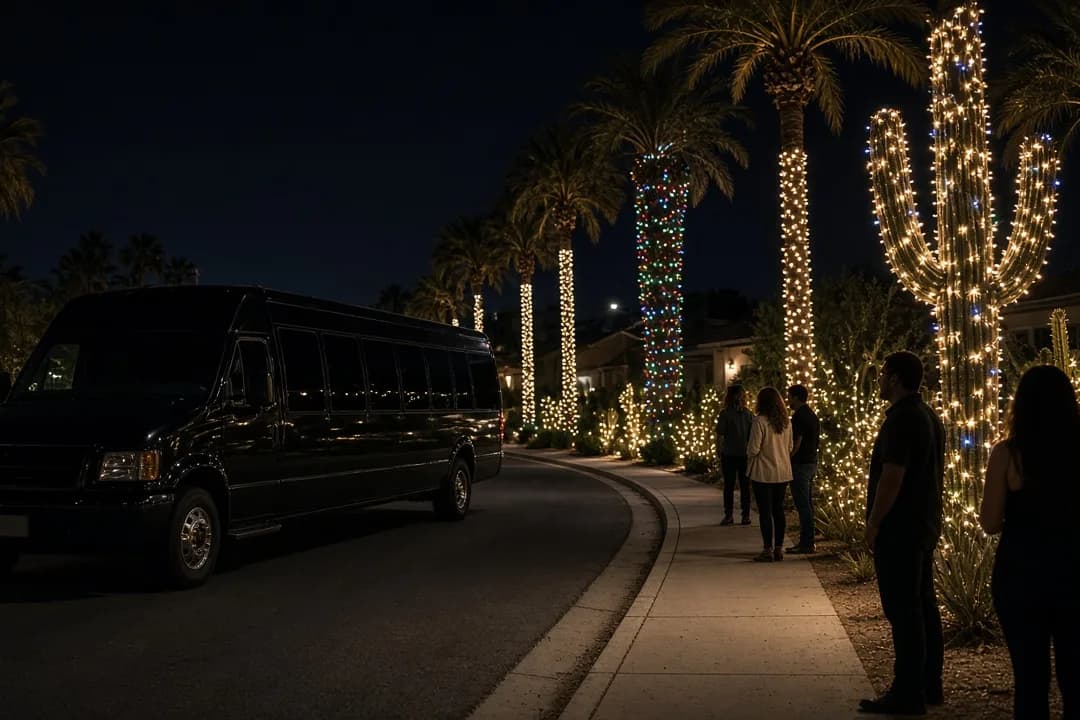
That's especially true on a holiday lights tour or New Year's Eve, when people dress for the party and not for a 45-degree walk from the curb. Tell your group to bring a layer, and remember the sun's down by about 5:30 in December.
The bigger adjustment is elevation. Sedona sits around 4,300 feet and often runs 10 to 15 degrees cooler than here. Flagstaff and the Grand Canyon South Rim are near 7,000 feet, with real snow, icy mornings and temperatures well below the Valley.
This tool covers Phoenix only. For Sedona day trips or a Grand Canyon run, look up the forecast where you're going and pack an actual jacket from October through April.