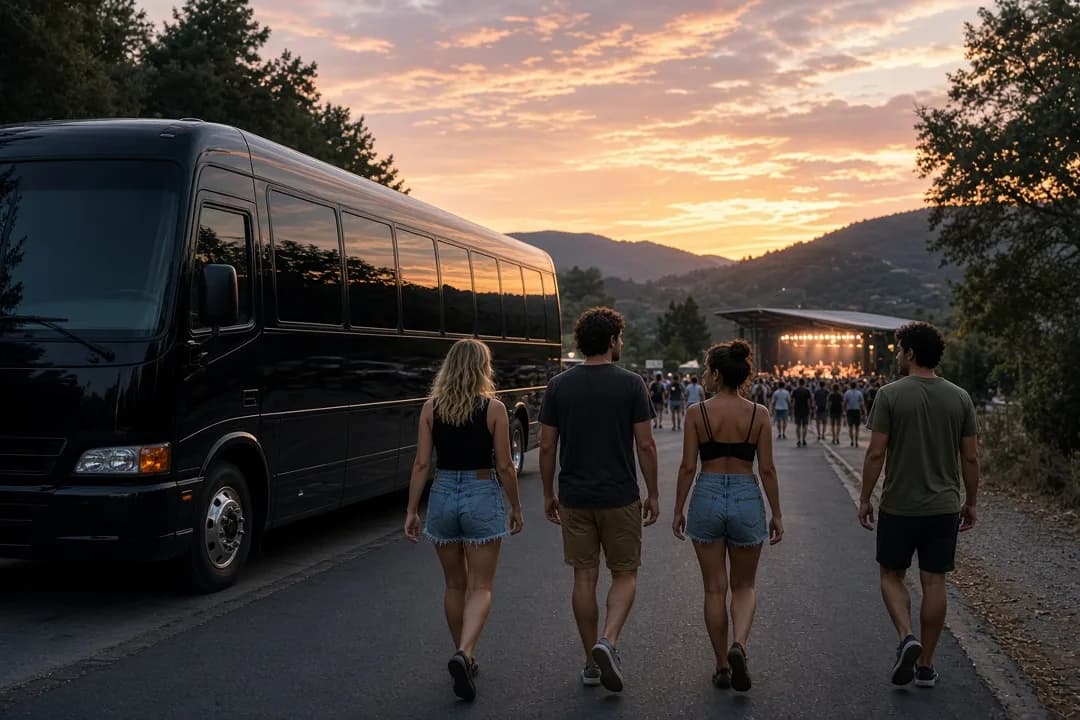
You bought the tickets months ago and haven't thought about the ride once. That's most people, which is exactly why the buses go fast in the two weeks before a big show.
The fix costs you nothing: ask for a vehicle the day you buy tickets. You already know the date, the venue and roughly who's in.
Below is how a concert night actually runs here, venue by venue.
Everybody asks in the same two weeks
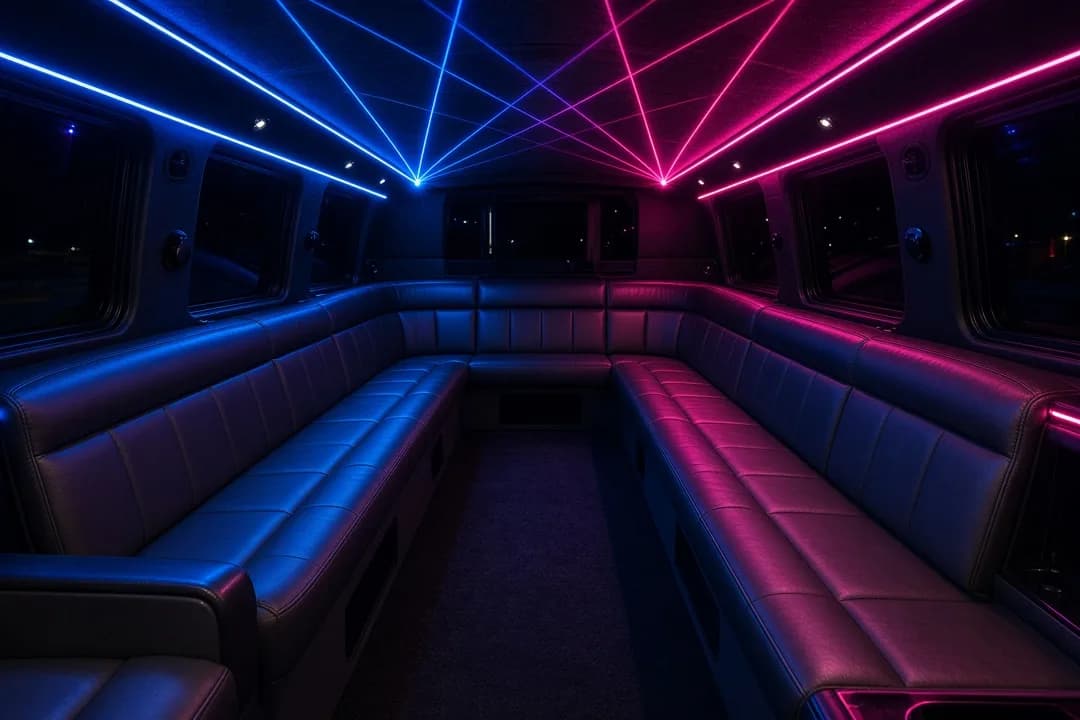
Concert groups plan later than anyone else we hear from. The median request lands about sixteen days before the show, which is the shortest window of any event we track, and it makes sense: you buy tickets, wait to see who else is in, and only then think about the ride.
The catch is that every other group going to your show is doing the same thing in the same fortnight. For a stadium date in Glendale, that head start is the difference between picking a size and taking what's left.
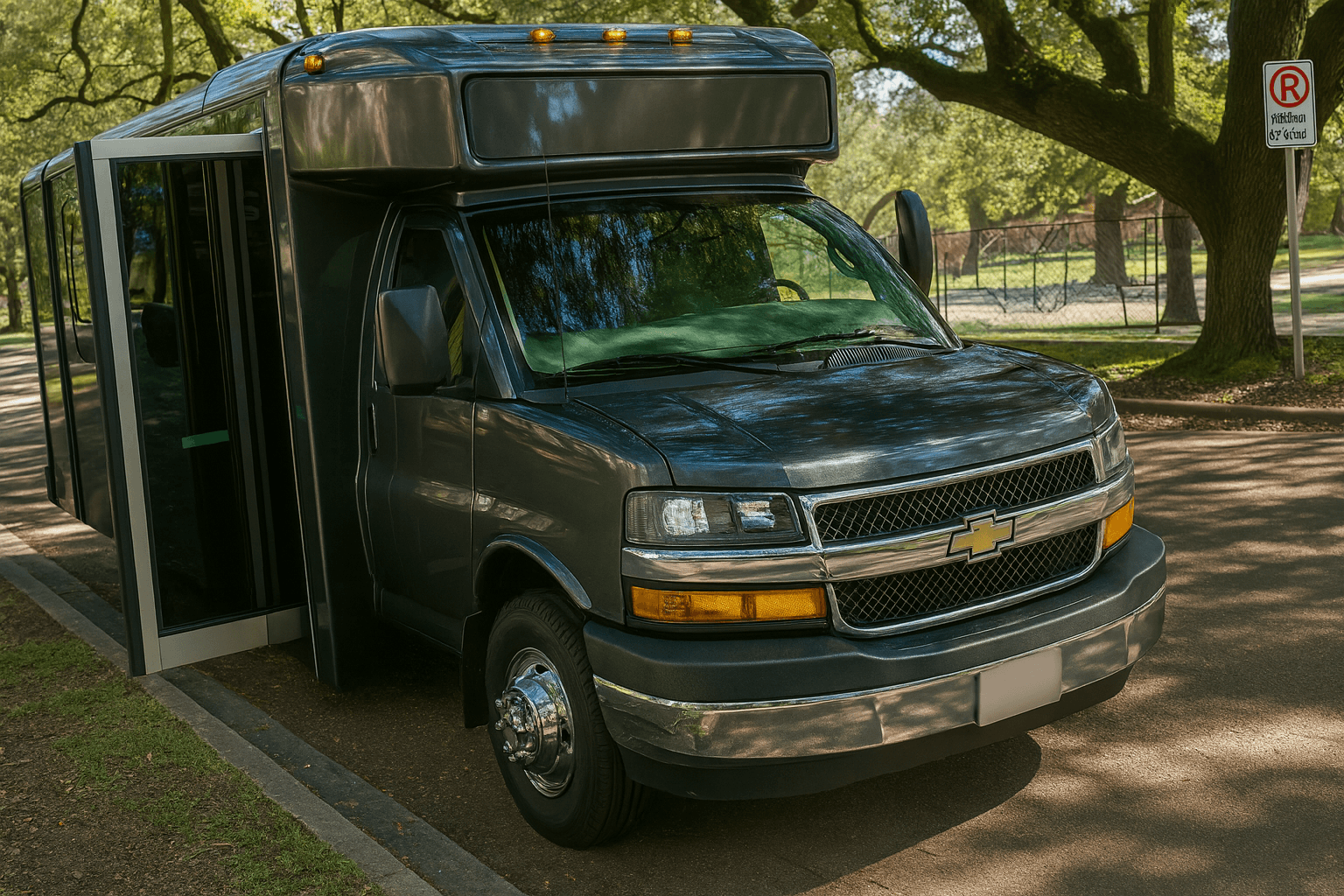
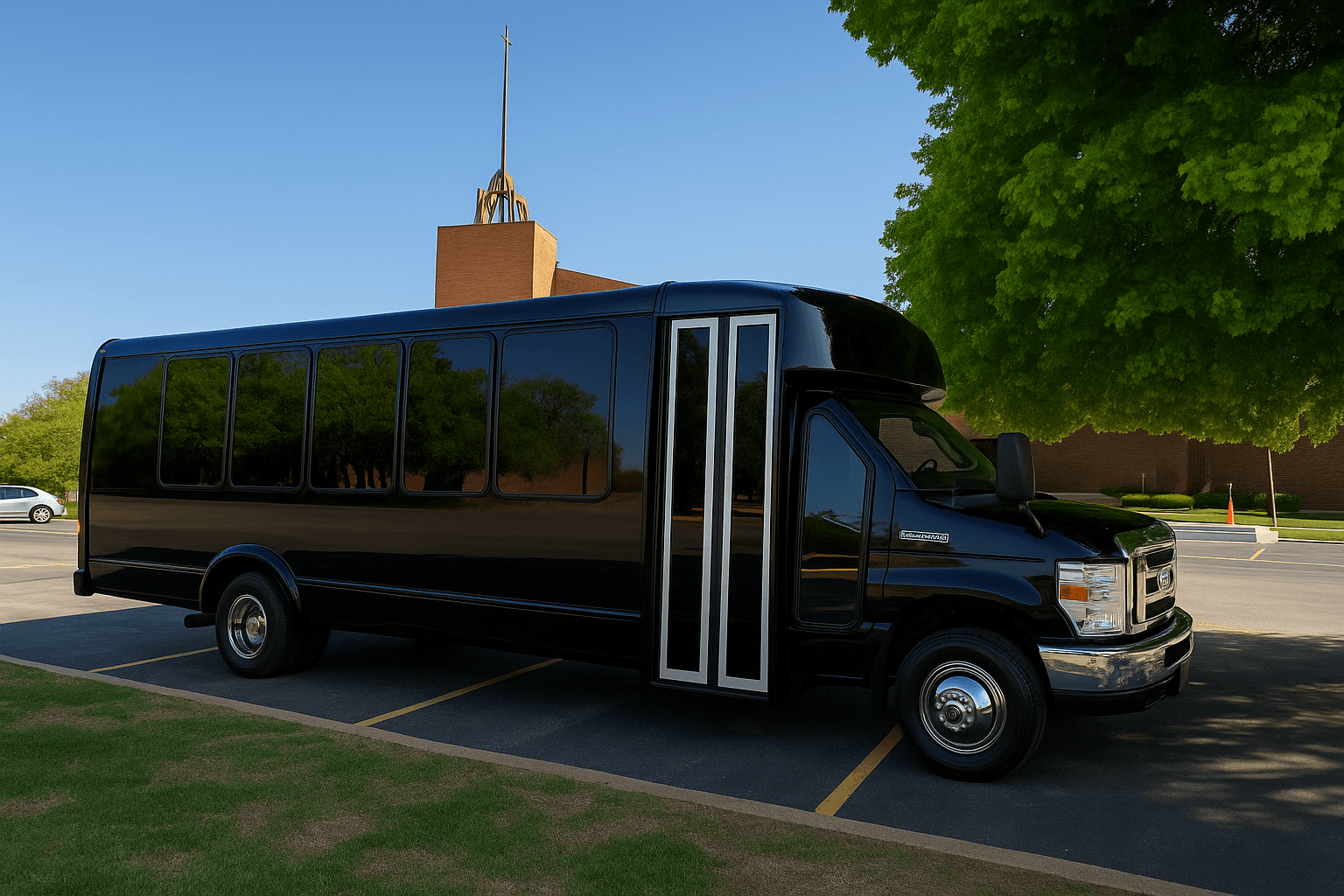
August is the heaviest month we see for concert and festival requests, which is late-summer tour season landing in the hottest stretch of the year. Groups of eleven to fifteen fit the 16-passenger party bus with breathing room. When three friend groups merge for one show, the 22-passenger party bus is the next honest step.
What arrival and exit are like
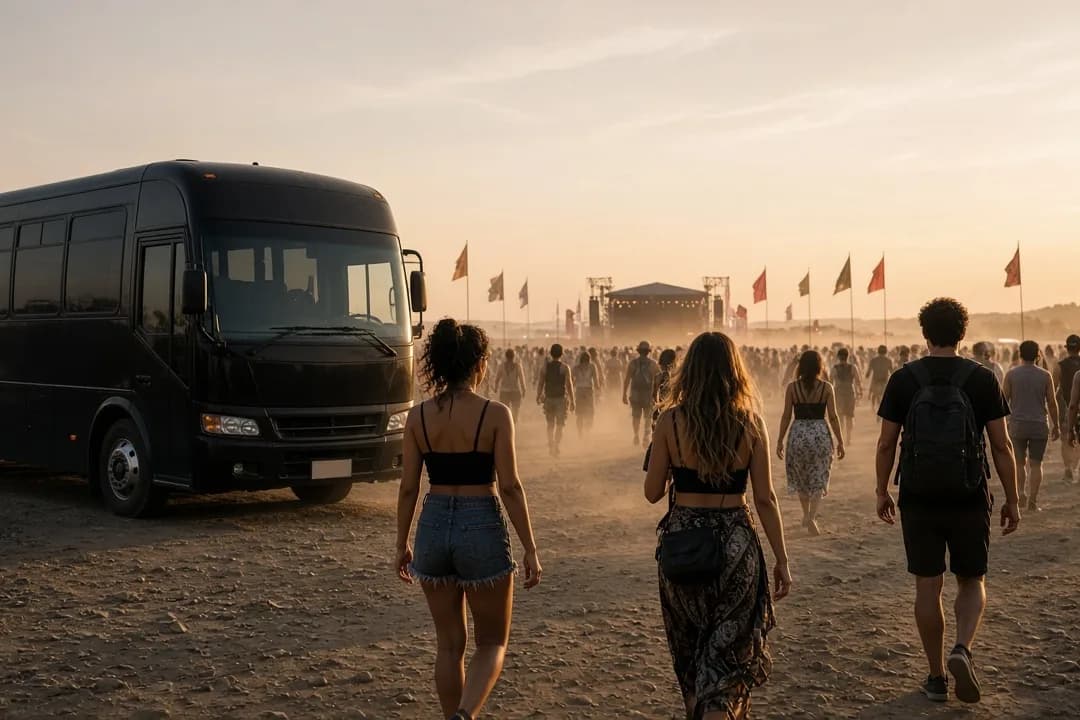
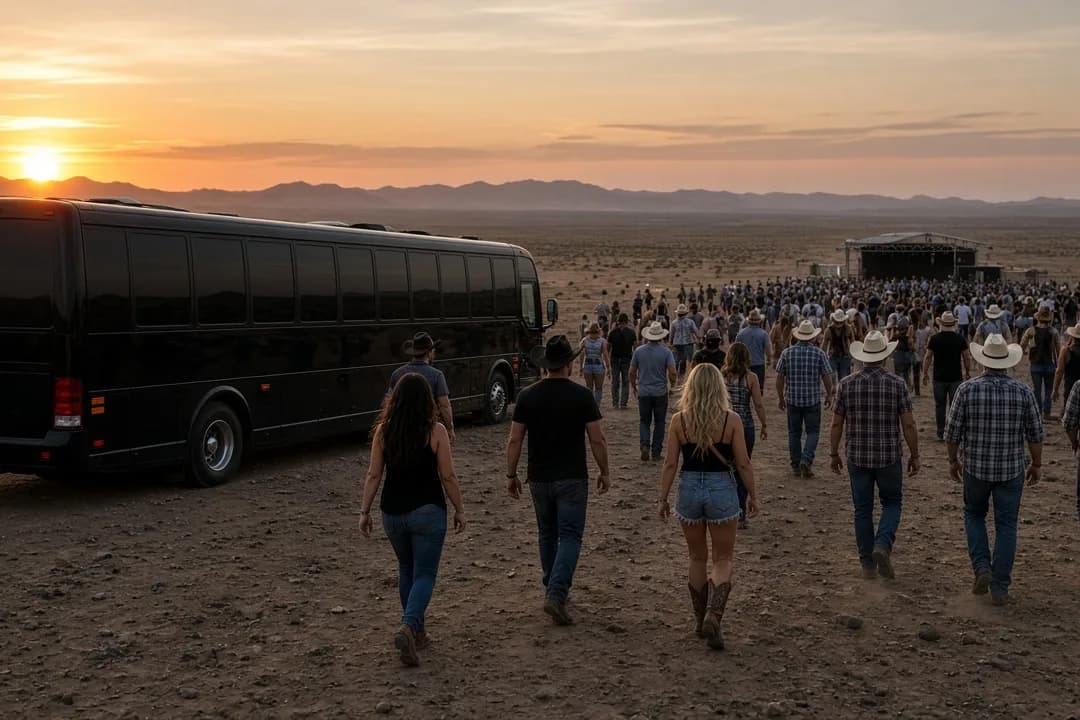
- Talking Stick Resort Amphitheatre, west Phoenix. The Valley's big outdoor shed, off I-10 near 83rd Avenue. Nearly everyone drives, and the lots empty slowly through a handful of exits. This is where a chauffeur and a pre-set meeting spot save you the most time all night.
- Footprint Center and Arizona Financial Theatre, downtown. Two blocks apart. Streets tighten before doors and some close afterward, so expect a drop a short walk from the entrance. The Footprint Center guide has the specifics.
- State Farm Stadium and Desert Diamond Arena, Glendale. Stadium tours put 60,000 people through one interchange. Westgate's restaurants let you come early and leave late, which beats both rushes.
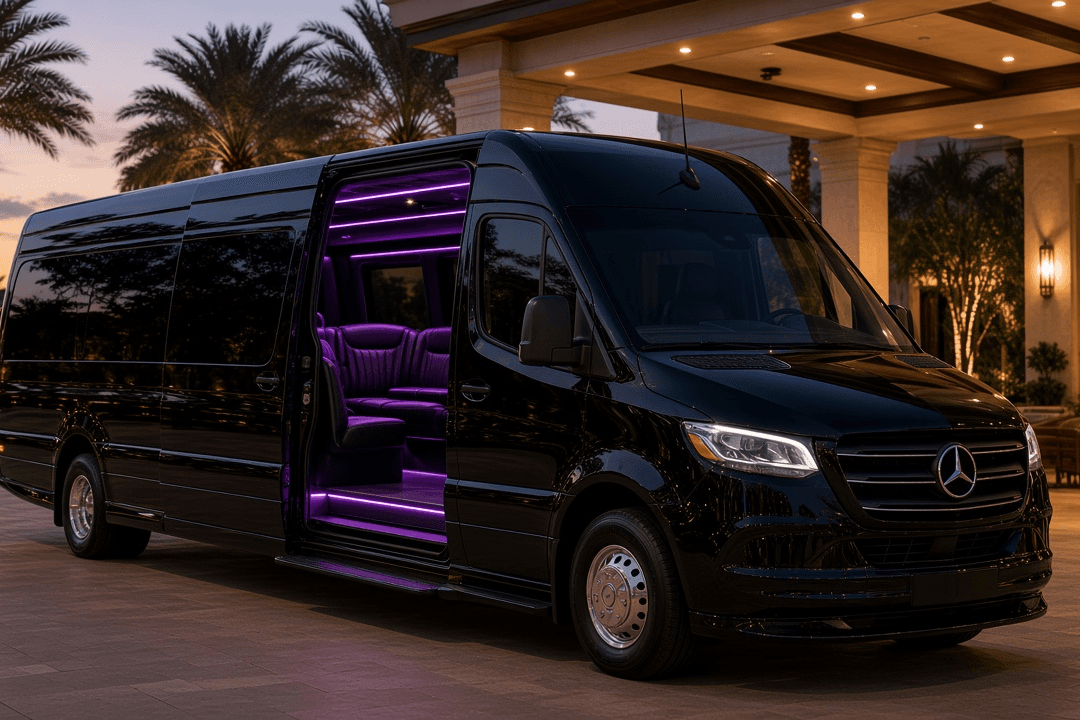
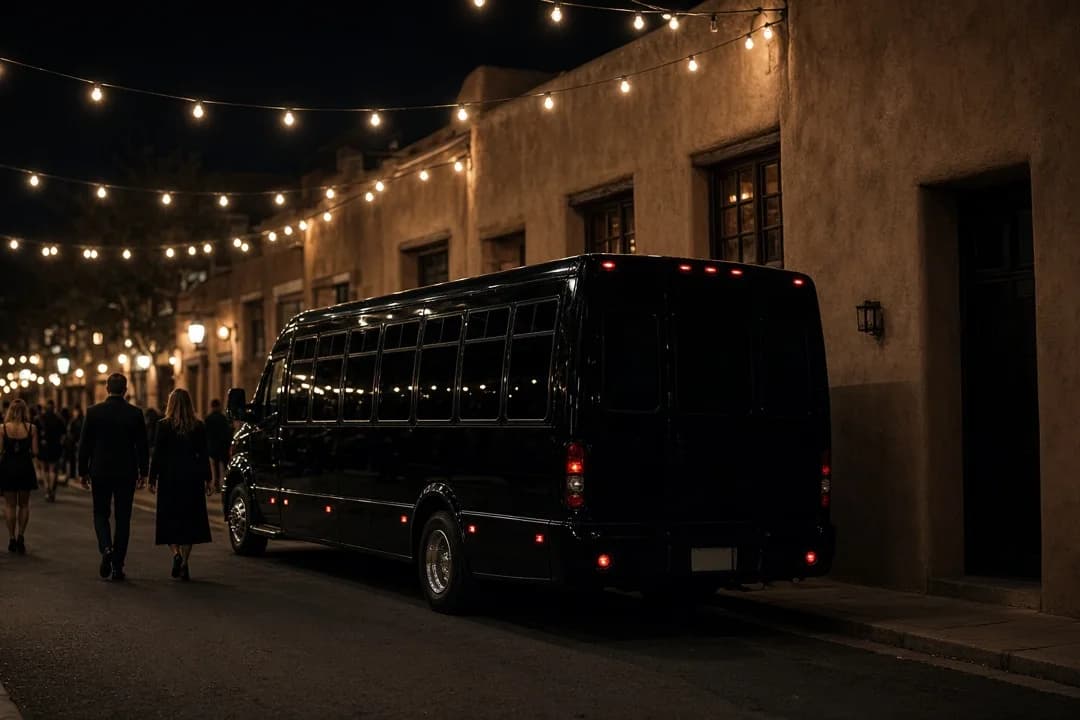
- The Van Buren, Crescent Ballroom, Marquee Theatre, Celebrity Theatre. Club and mid-size rooms with street or small-lot access, where a Sprinter is much easier to place than a full bus.
Every venue sets its own rules for where large vehicles can stop, and those change by event. Tell us the show and we'll plan the drop and the pickup for that night specifically.
A concert night that works
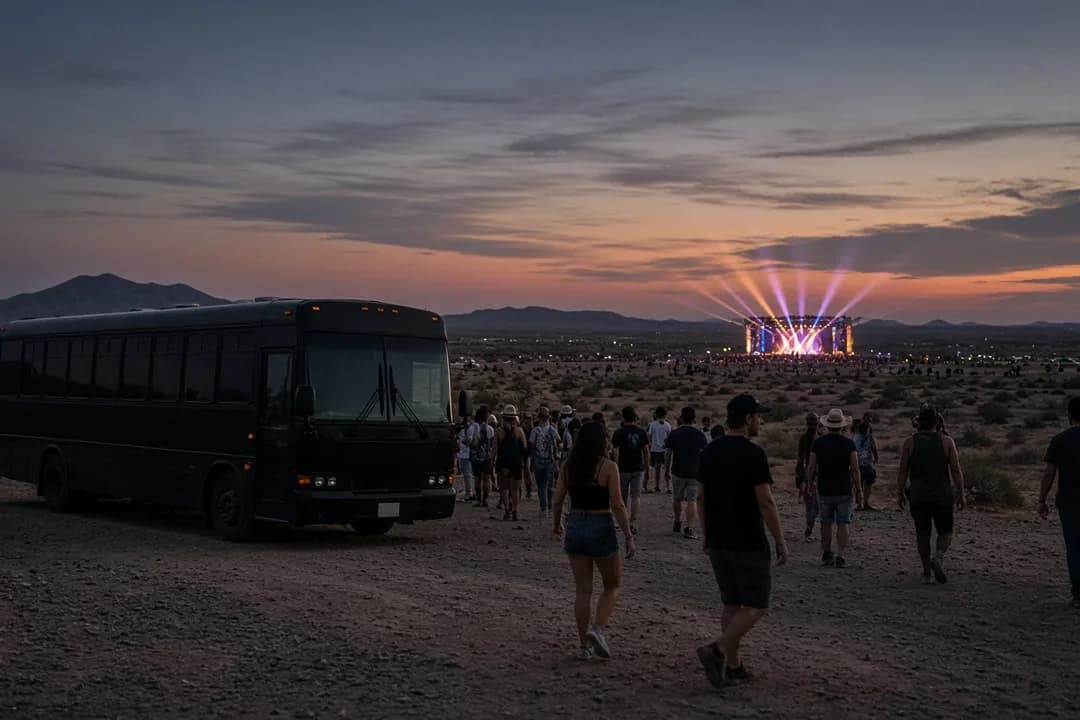
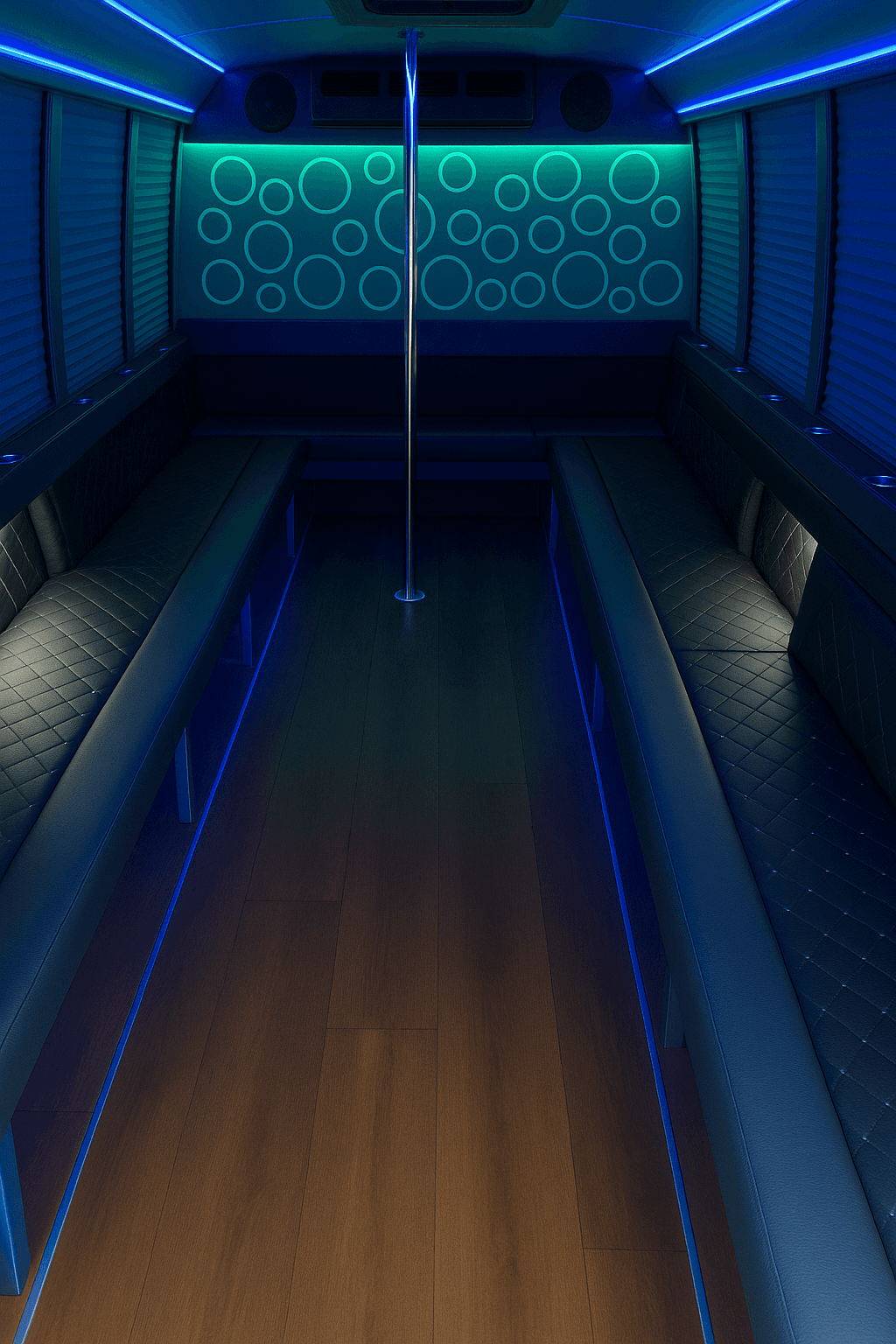
Here's how an amphitheater night runs for a group leaving Chandler for 7:00 doors and an 8:00 opener.
- 5:15 Pickup at one house. Cooler loaded, playlist already sorted.
- 5:30 to 6:30 West on I-10 in evening traffic. This is the pregame, and for a lot of groups it's the best hour of the night.
- 6:45 Drop-off. Anything that won't clear the clear-bag policy stays on board.
- 10:45 Show ends. Walk to the meeting spot you agreed on, not the main gate.
- 11:15 Rolling, while most of the lot is still stacked up. Late-night food on the way back.
- 12:30 Home.
That's a seven-hour span door to door, which is why concert bookings run longer than most Valley nights out. Build the playlist to the length of the drive with the playlist calculator so the headliner's big one lands right as you pull in.
August shows and the heat
Tour season peaks here exactly when the weather is worst. An August evening at an outdoor amphitheater can still be 105 at showtime, and lawn seats get no relief until well after dark.
- Drink water on the ride in, not just beer. Dehydration plus alcohol in that heat is the most common reason somebody's night ends in the third song.
- Arrive closer to the opener than to doors. An hour in a security line on hot asphalt is avoidable.
- Keep a change of shirt and a cold towel on the bus. You'll be glad at eleven.
- Watch the monsoon forecast from July into September, since storms delay outdoor shows. The weather checker gives you a same-day read.

Sizing when the list keeps moving
Concert groups are fluid in a way birthday groups aren't. Somebody sells a ticket, somebody's cousin buys it, a coworker finds two seats in another section and wants a ride. Plan for the churn instead of fighting it.
Count people who hold a ticket, not people who said they were interested, then add two seats of margin. At twelve to fourteen with a long drive ahead, the party bus earns its keep. At ten, headed to a downtown club show, the 14-passenger limo Sprinter gets closer to the door and loads faster.
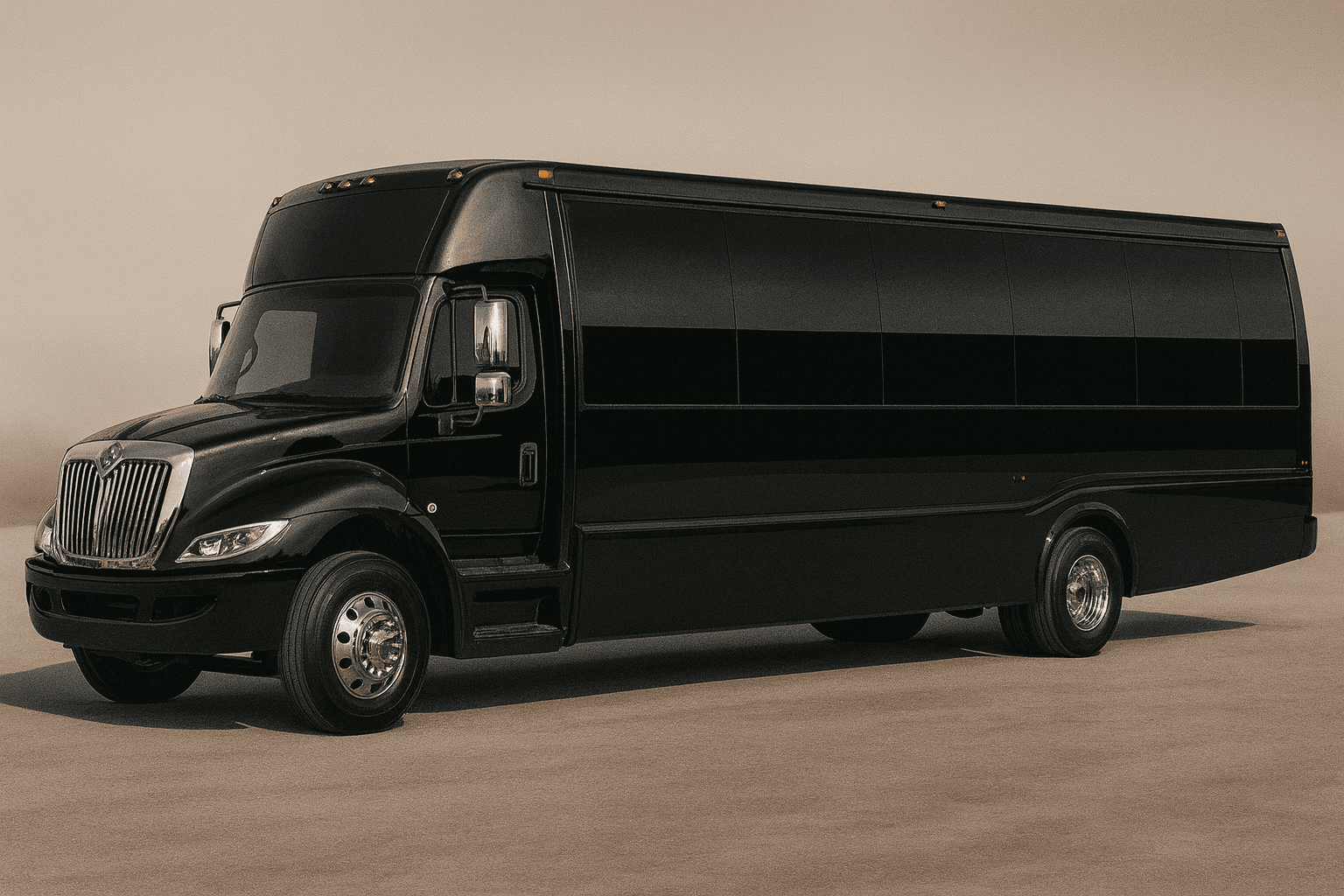
Past twenty-five, the 30-passenger party bus keeps everyone together, and the big buses for a big show night are the first to go. Seats in different sections are fine. Different vehicles are how groups lose each other. For camping weekends and hotel loops, the festival page covers a different set of problems.
Sample Concert Night Party Bus Itinerary
- 1
5:30 PM — Party bus picks up group from central meeting point
- 2
5:45 PM — Pre-show drinks and music on the bus (artist's discography on blast)
- 3
6:15 PM — Dinner stop at a restaurant near the venue
- 4
7:15 PM — Drop-off at venue entrance — skip the parking lot entirely
- 5
7:30 PM — Doors open; enjoy the show!
- 6
10:30 PM — Concert ends; walk to pre-arranged pickup point
- 7
10:40 PM — On the bus while everyone else is stuck in the parking lot
- 8
11:00 PM — Post-concert food stop (optional) — LoLo's, Taco Bell Cantina, or late-night spot
- 9
11:30 PM — Safe drop-offs at home; concert night complete
Free quote
Planning a concert transportation trip?
Send your date, headcount, and stops and we will match a vehicle to the plan. The form at the top of this page takes about a minute.
Helpful Resources
- Footprint Center — EventsDowntown Phoenix arena concert schedule
- Ak-Chin Pavilion — ShowsAmphitheatre concert listings
- The Van Buren — CalendarIndie and mid-size shows in Roosevelt Row
- Crescent Ballroom — EventsEclectic music venue downtown