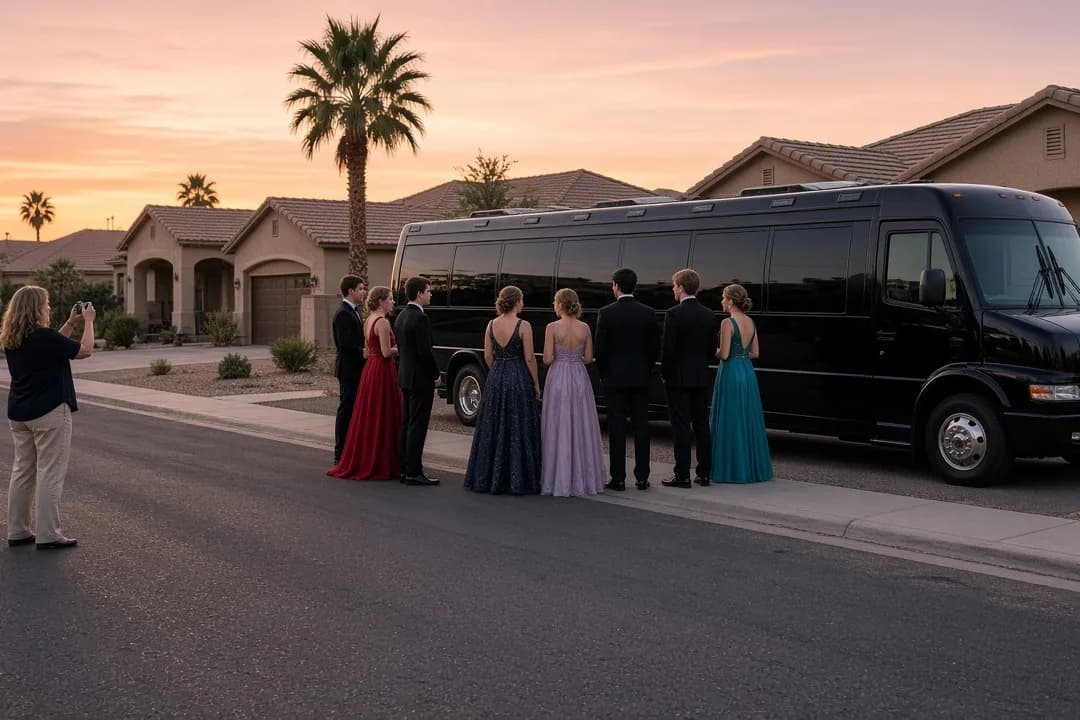
Prom group in formal wear gathered beside a party bus before leaving for the dance

Free Phoenix planning tool

How to Split It Without Chasing People

Put in the total, the number of riders and anyone riding free. Add the tip or the drinks if you want. You get one number to send to the group chat.

Start your trip

Tell us the basics. We’ll help with the rest.

or

This answers the question you'll get within a minute of proposing a bus: how much is it each? Enter the total, how many are riding, how many ride free, and anything extra you're folding in, and it gives you a clean share per person.

Use it once you have a written quote, or use a placeholder from the cost estimator while you're waiting. Nothing you type leaves your browser, and nothing's kept once you close the page. The rest of this page is about the harder half: getting people to actually pay.

Split Cost Calculator

Free, no sign-up, and nothing you type reaches us.

Each paying rider owes

$100.00

$1,200.00 ÷ 12 paying riders

Collect before you book, not after the ride. Ask us how deposits and payment work when you request your quote, then set your pay-by date a few days ahead of whatever is due first.

Step by step

How to use the Split Cost Calculator

  1. 1

    Enter the total

    The full charter total from your written quote. If it hasn't arrived, put in a placeholder so the group can react to a rough share, then update it when the real figure lands.

  2. 2

    Riders, then free seats

    Total riders first, then how many guests of honor ride free. Zero is fine. It subtracts the free seats and tells you how many people are actually paying, which is the number that matters.

  3. 3

    Fold in the extras

    Sharing a tip, drinks, ice or decorations? Put that amount in the extras field. It gets added before the split, so each person sees one figure instead of three separate requests.

  4. 4

    Round up

    Exact, up to the next dollar, or up to the next five. Round up. Nobody minds $85 instead of $83.34, payment requests look cleaner, and the small surplus covers ice or a tip bump.

  5. 5

    Post it with a date

    Send the share to the group chat with a pay-by date and where to send it. Say out loud what happens to the rounding surplus, and pin the message so nobody asks you twice.

Back to the tool

One person pays us, everyone pays that person

A charter gets reserved by one person. Their name is on it, their payment is on file, and they're who we call on the day. Twelve separate payments isn't how this works, so plan on collecting from your friends yourself.

When you ask for your quote, ask how payment works too: what's due to reserve, when the balance is due, and what we take. Those answers set your collection deadline. If something's due at booking, you want the group's money in hand before that date, not after.

Organizing is a favor to your friends. It shouldn't also be a loan. For a small group the stakes are real, because a typical ten-person quote runs around $900, so covering two no-shows means eating about $180 of your own money.

Collect before you reserve, every time. A thumbs-up in the chat is a maybe. A payment is a yes. Collecting first also hands you your real headcount, which is the thing that decides what vehicle you're asking us about.
Friends comparing payment app requests on their phones while planning a group charter
Put the event name in the payment note. Matching payments to riders then takes seconds instead of an evening.

Getting people to actually pay

Most of the pain here isn't math, it's chasing. A few habits kill almost all of it.

  • One message with the amount, the pay-by date and where to send it. Pin it.
  • Use the payment app most of the group already has. Put the event name in the note so you can match payments later.
  • Send requests instead of waiting for people to remember. A request sits in their app until they deal with it.
  • Round up, and tell everyone where the extra goes.
  • State the dropout rule in that same first message, so it never turns personal later.

Keep a simple paid list as you go. The guest list manager works well for it, because who's paid and who's actually coming are usually the same question.

What one dropout does to everyone else

Groups of eleven to fifteen are the most common size we see in Phoenix, and that's exactly the size where a couple of cancellations sting. The vehicle costs the same whether fifteen people board or twelve.

The math is blunt. A $1,200 night across fifteen payers is $80 each. Lose three people and the remaining twelve owe $100. That's a 25 percent jump for the friends who kept their word, and they'll notice.

So decide the rule before anyone pays. The usual version: after the pay-by date, a rider who drops still owes their share unless they find a replacement. If the list shrinks early enough, ask us whether something smaller like a 14-passenger limo Sprinter fits the new count better.
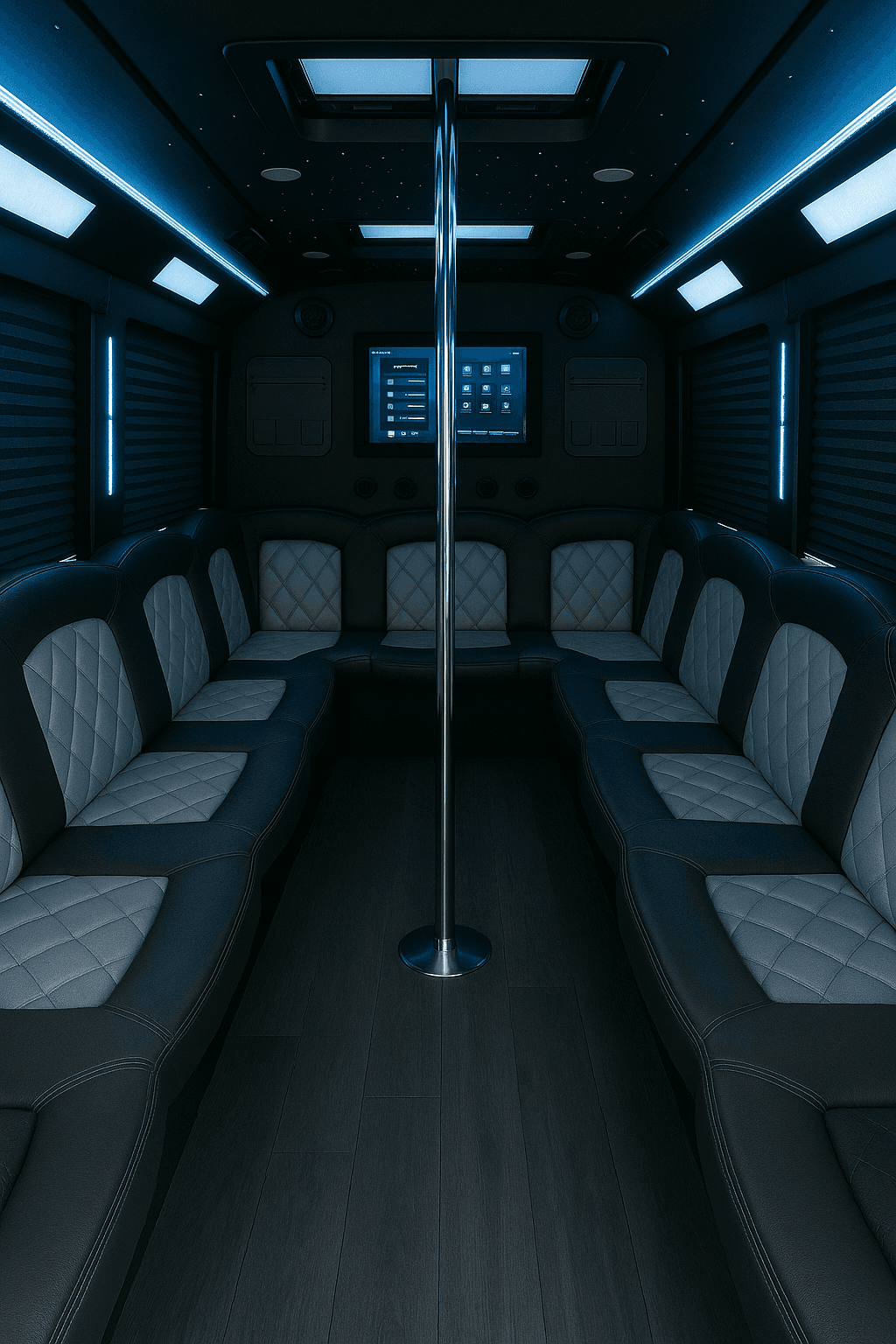
Interior of a 22-passenger party bus with perimeter seating and color-changing lights
A 22-seat cabin split 22 ways only works if 22 people actually pay. Size from paid seats.

Covering the bride or the birthday person

The free-seat field exists because most Valley charters are celebrating somebody. Bachelor and bachelorette groups here run around twelve riders, so one free seat moves everybody's share by a noticeable amount.

Take a twelve-person bachelorette night at $1,200 with the bride riding free. Eleven payers owe $109.09. Round to the next five and it's $110 each, with about $10 left over. Say what that ten dollars is for, whether it's ice, a tip top-up or the bride's first drink.

For a birthday, settle this quietly before invitations go out. The guest of honor should never see the payment thread. If you're celebrating a couple, enter two free seats.

Prom: parents split, students ride

Prom groups split by household, not by rider. One parent reserves and the other families reimburse that parent. Count paying students rather than couples, unless every family has agreed that dates are covered by the inviting student.

Prom lists move until the week of the dance, so set the pay-by date early, collect from parents directly, and size the vehicle from paid seats. A 20-passenger party bus is where most Valley prom groups start. If gratuity isn't on the quote, work it out in the tip calculator and add it as the extra here, so parents pay once.

Keep the money conversation between adults. Students can own the playlist and the photo stop. And mention in that parent thread that the ride is alcohol-free, which for a prom group it always is.
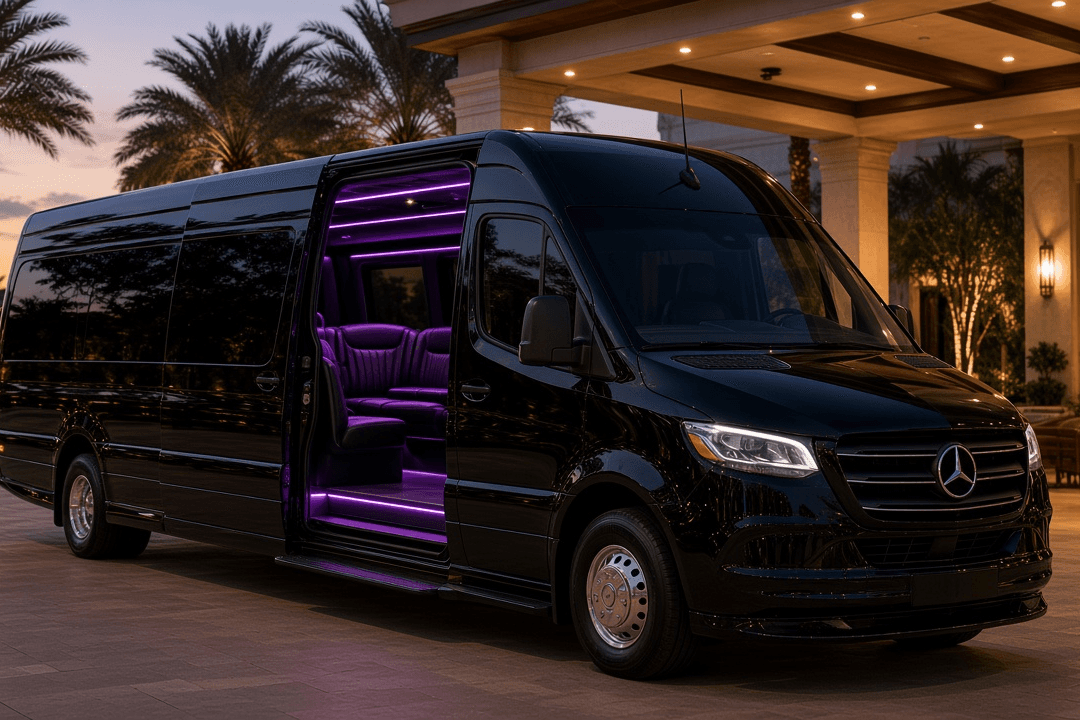
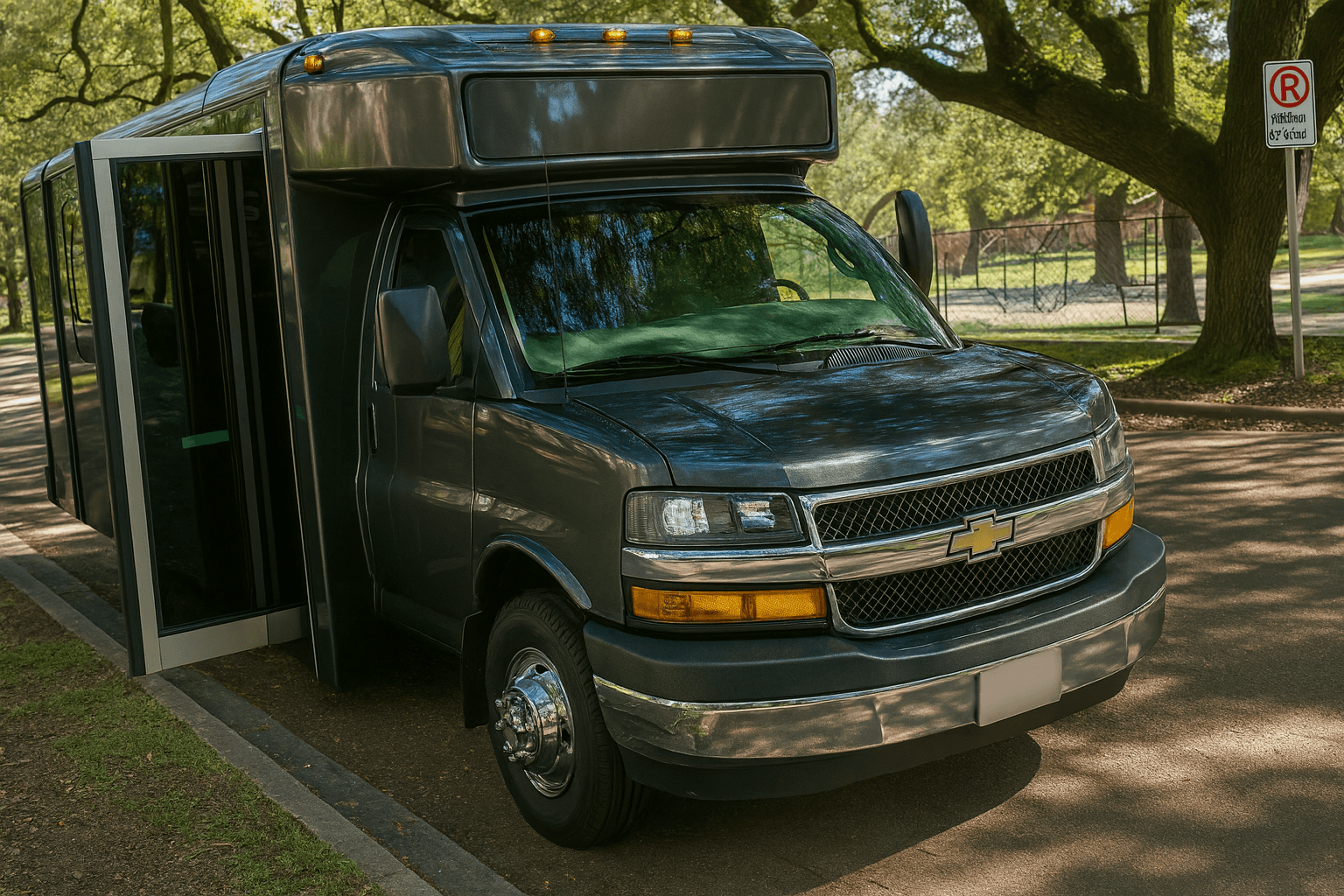
Phoenix Party Bus data

The numbers behind this tool

Pulled from our own Phoenix bookings and inquiries. Good for planning. Not a price list.

$900

median historical quote for groups of 1–10

Split ten ways, a typical small-group quote has historically worked out to roughly $90 a person, with the driver's gratuity already included.

32%

of groups are 11–15 passengers, the largest band

If you are in the 11–15 range, you are choosing between a Sprinter limo and a compact party bus. Ask for both quotes.

12

riders is the median bachelor or bachelorette group

These are Sprinter-limo and small-party-bus groups. A 14-passenger Sprinter limo or a 16–18 passenger party bus covers most of them.

Source: Phoenix Party Bus inquiry data, June 2023September 2026 (2,678 Phoenix-area inquiries). Inquiries are not bookings; historical quotes are not current prices. See the full data · Methodology

Your turn

Pricing Polls

Vote to see how other riders answered. Results update live, and no sign-up is needed.

More pricing pollsPoll results

Split Cost Calculator FAQ

Straight answers on minimum hours, deposits, what is included, and what to bring.

Enter everyone who's riding, then say how many are riding free. The free seats come out and the total divides across whoever's left. Twelve riders, one free seat and a $1,200 night means eleven people owe $109.09 each. Round up to the next five and it's a tidy $110 with a little left over.
It's the money left over once shares get rounded up, and it's shown so you can tell people where it goes. Eleven payers at $110 on a $1,200 night collects about ten dollars extra. Spend it on ice, add it to the tip, or hand it back at the end. Just say which, up front.
Yes, if gratuity isn't already on your written quote, so people pay once instead of twice. Check the quote first. If the tip is left to your group, work out the amount and put it in the extras field so one number covers the ride and the driver. If the quote lists gratuity, save the extras field for drinks.
Everyone else pays more, because the vehicle costs what it costs. On a $1,200 night, going from fifteen payers to twelve takes each share from $80 to $100. That's why the rule goes in the first message: after the pay-by date, a rider who drops still owes unless they find someone to take the seat.
Before you reserve. Ask us how deposits and payment work when you request the quote, then set your pay-by date a few days ahead of whatever's due first. Paid seats give you a real headcount, which is what decides the vehicle. Collecting after the ride means chasing your friends for a month.
Evenly per student, with one parent reserving and the other families paying that parent back. Decide early whether a date from another school pays their own seat or is covered by the student who invited them. Enter paying students as riders, add gratuity in the extras if your quote leaves it to the group, and round up.
It often has been, as long as the seats are full. A ten-person night has typically been quoted near $900, about $90 a head. Fifteen people at around $1,200 works out closer to $80. Those are past quotes rather than prices, and a few empty seats erase the advantage almost immediately.

Still have questions? Call or text (480) 347-0743

Have your pickup ZIP, date, group size, and hours ready and we can quote the same day.

Call or Text Now

Planned it? Now price it.

Send us the date, the headcount, the pickup city and your stops. We'll come back with what's open and a written quote.