When does the clock start and stop?
Generally, your time runs from the scheduled pickup to the final drop-off, and it keeps running while your driver waits outside the restaurant. You're reserving the vehicle and the driver for a block of hours, so the time you spend inside places is part of that block.
That's why the planner adds stop minutes and drive minutes together instead of just counting road time. Exactly how time and overtime are counted on your trip will be written on your quote, so read that line and ask us if anything looks unclear.
Two thirds of Valley groups ask for four hours. Treat that as the common answer, not the starting assumption, and let your actual plan pick the number. If you haven't settled the order of your stops yet, sketch it in the route planner first.
How long stops actually take
Timelines don't fail on the road. They fail at the stops, where people budget 45 minutes for dinner and a table of 16 takes twice that. Start from these:
- Sit-down dinner: 75 to 90 minutes for a group, more if everyone orders separately.
- A bar or club: 45 to 60 minutes. Any less and half the group is still waiting on a drink.
- Photo stop: 20 to 30 minutes, walk there and back included. The photo spot finder has spots that work for a big group.
- Loading everyone: 10 to 15 minutes, every single time. Someone's always in the restroom or closing a tab.
Add that loading time into each stop's minutes. Across three stops it's 30 to 45 minutes of your night that nobody's mental itinerary includes. For drive times between Valley cities, the Phoenix drive time calculator is more honest than your memory.
Why four hours runs out fast
Run a normal night through it. Pickup in Chandler at 6:00, half an hour to dinner, 90 minutes at the table, 15 minutes to the first bar, an hour there, 10 minutes to the second, an hour there, 35 minutes home. That's five hours before anything goes wrong.
Drop a stop or shorten dinner and it fits in four. Keep all three and you need five, and it's much better to know that now than at 11 p.m.
The good news is the cost of being honest is predictable. An extra hour has usually added a couple hundred dollars to what groups get quoted.
Asking for it up front beats running into overtime at the end of the night and clock-watching the whole way. See what it does to your number in the cost estimator.
Times you can't move
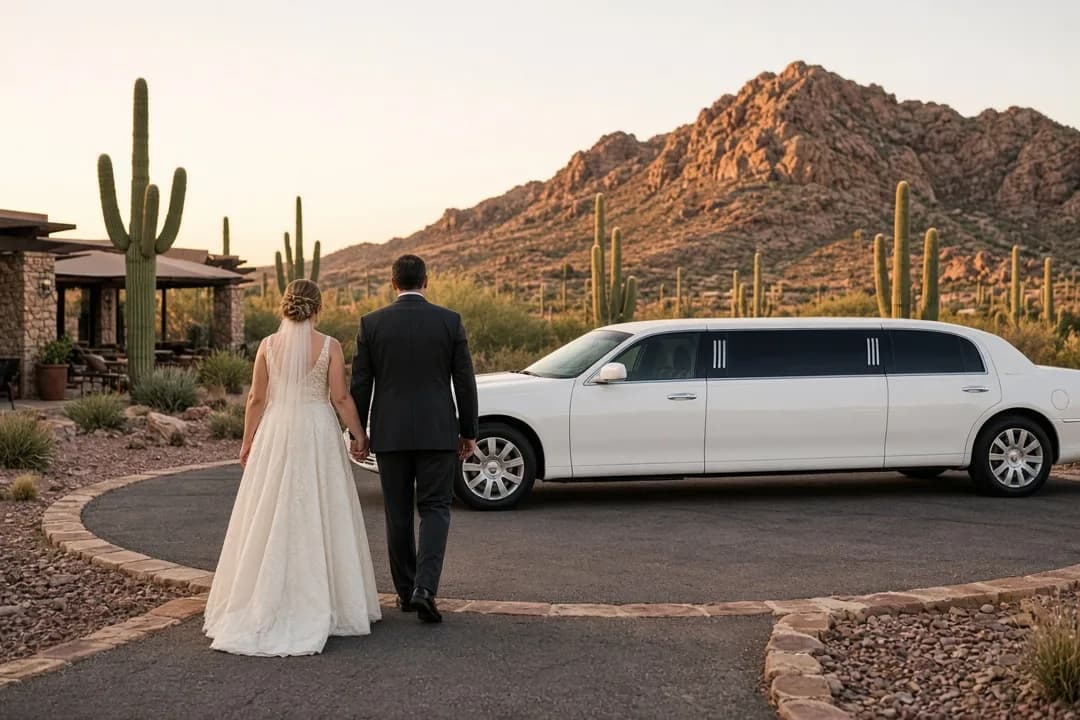
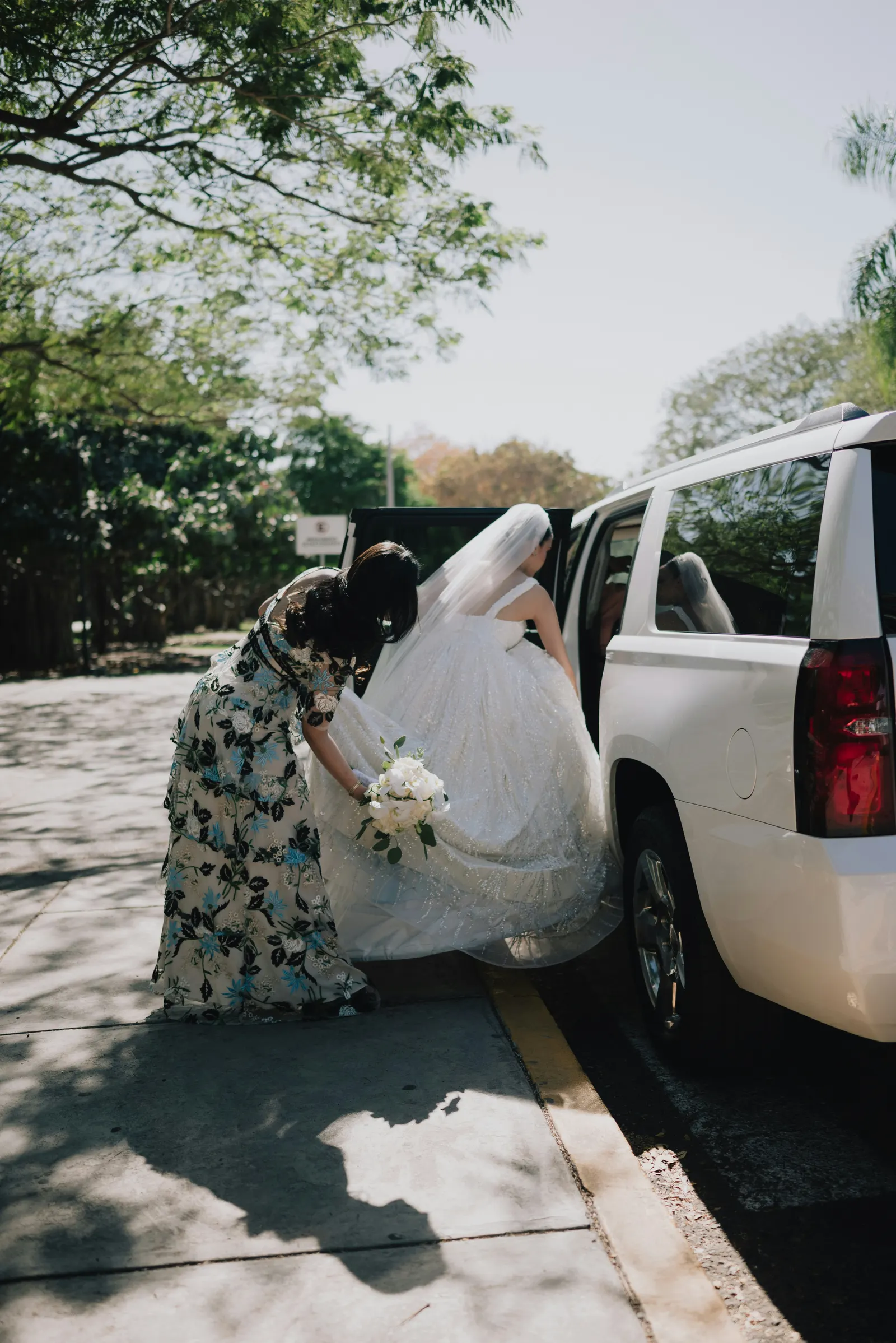
Some nights are built around a clock you don't control. For wedding transportation, put in the ceremony start and work backward. Guests need to be seated 15 to 20 minutes before it begins, so the shuttle has to arrive earlier than that sounds.
If one bus is running loops from a hotel, enter each loop as its own pair of stops and check that the last run still lands on time.
The gap between ceremony and reception is when the wedding party takes photos, so plan it as a real stop rather than dead air.
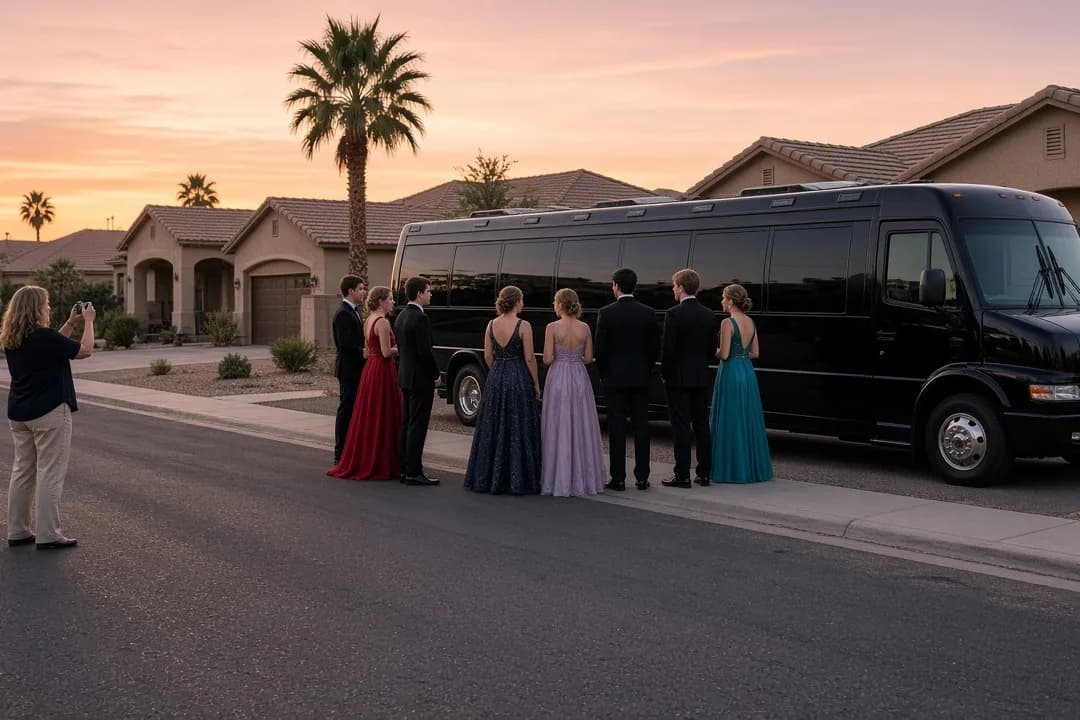
Prom has two fixed points: when doors open and when the dance ends. A lot of schools stop admitting students after a set time, so check your school's rule before you build anything.
Photos, dinner, dance, ride home is the usual order. Our prom party bus page covers the parent side of it.
Padding for Friday traffic
Four nights in five, Valley groups are out on a Friday or Saturday, which means your bus is sharing the road with everyone else's night out.
Old Town Scottsdale slows to a crawl for the last half mile, and pulling a big vehicle to the curb there takes longer than any map suggests. Add 10 minutes to anything that ends in the Entertainment District after 9.
Games and concerts are the other trap. Getting out of State Farm Stadium or a downtown arena with tens of thousands of other people can eat 30 minutes before you even reach the freeway.
Pick a meeting spot, give the group a firm time, and put a generous number on that drive leg. The sporting event transportation page has more on post-game pickups.